
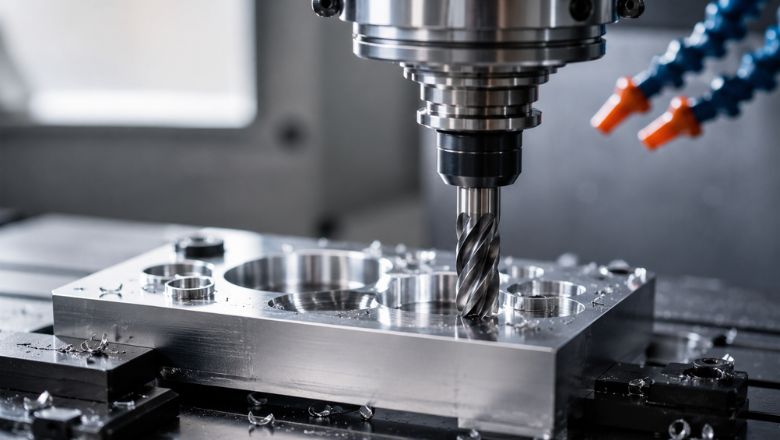
Common CNC Tool Failures and How to Avoid Them
CNC machining depends heavily on the performance of every CNC Tool used during production. Tool failures can lead to poor surface finishes, dimensional inaccuracies, machine downtime, increased production costs, and missed delivery deadlines. Understanding the common causes of CNC tool failure and implementing preventive maintenance strategies can significantly improve productivity, tool life, and machining efficiency. Choosing the Right CNC Tool for your machining application is essential for achieving precision, longer tool life, and consistent production quality.
For manufacturers in Ahmedabad, Gujarat, selecting the right CNC Tool and following proper machining practices can help achieve consistent quality while reducing operational costs.
What are the most common CNC Tool failures?
The most common CNC Tool failures include:
- Tool wear
- Chipping
- Tool breakage
- Built-up edge (BUE)
- Thermal cracking
- Excessive vibration and chatter
These issues can be prevented through proper tool selection, correct cutting parameters, adequate coolant usage, regular inspection, and preventive maintenance.
What is a CNC Tool?
A CNC Tool is a cutting instrument used in Computer Numerical Control (CNC) machines to remove material from a workpiece and create precise components. Common CNC tools include:
Features of CNC Tools :
- High precision machining
- Excellent repeatability
- High-speed cutting capability
- Enhanced durability
- Compatibility with various materials
Applications :
- Automotive manufacturing
- Aerospace components
- Medical equipment
- Mold and die production
- Engineering workshops
- Precision metal fabrication
Continuous workforce training and skill development are essential for improving CNC machining efficiency and reducing tooling-related errors.
Common CNC Tool Failures :
1. Tool Wear :
Tool wear occurs naturally over time due to friction and cutting forces.
Signs :
- Poor surface finish
- Increased cutting force
- Dimensional inaccuracies
Prevention :
- Monitor tool life regularly
- Use appropriate cutting speeds
- Select suitable tool coatings
2. Tool Chipping :
Small fragments break away from the cutting edge.
Causes :
- Interrupted cuts
- Excessive feed rates
- Hard workpiece materials
Prevention :
- Reduce feed rates
- Use tougher tool grades
- Optimize cutting paths
3. Tool Breakage :
Complete failure of the cutting tool.
Causes :
- Excessive cutting load
- Improper tool setup
- Machine vibration
Prevention :
- Proper tool clamping
- Correct machining parameters
- Routine machine maintenance
4. Thermal Cracking :
Repeated heating and cooling create cracks on the tool surface.
Causes :
- Intermittent coolant application
- High-temperature machining
Prevention :
- Maintain consistent coolant flow
- Use heat-resistant tool materials
5. Chatter and Vibration :
Excessive vibration impacts tool life and part quality.
Causes :
- Improper tool overhang
- Machine instability
Prevention :
- Minimize tool extension
- Increase setup rigidity
Comparison Table of CNC Tool Failures :
| Failure Type | Main Cause | Impact | Prevention |
|---|---|---|---|
| Tool Wear | Friction | Reduced Accuracy | Monitor Tool Life |
| Chipping | Impact Loads | Poor Finish | Optimize Feed Rate |
| Breakage | Overload | Production Stoppage | Proper Setup |
| BUE (Built-Up Edge) | Material Adhesion | Surface Defects | Better Lubrication |
| Thermal Cracking | Heat Cycles | Tool Damage | Consistent Cooling |
| Chatter | Vibration | Poor Quality | Improve Rigidity |
Benefits of Proper CNC Tool Maintenance :
Regular CNC Tool maintenance improves productivity, accuracy, and profitability.
Advantages :
- Longer tool life
- Better surface finish
- Reduced downtime
- Lower operating costs
- Improved machining consistency
- Enhanced product quality
Disadvantages of Neglecting Maintenance :
- Frequent tool replacement
- Increased scrap rates
- Higher production costs
- Unexpected machine downtime
India’s manufacturing sector is increasingly adopting advanced machining technologies and smart factory solutions to improve productivity and reduce operational costs.
Cost Factors Associated with Tool Failure :
Several factors influence CNC tooling costs:
- Tool material quality
- Coating technology
- Machining speed
- Workpiece material
- Coolant effectiveness
- Operator expertise
- Machine condition
Industry studies indicate that tooling costs can represent 3%–5% of total manufacturing costs, while improper tooling practices can significantly increase production expenses.
Industry Trends in CNC Tool Technology :
Modern CNC tooling is evolving rapidly.
Current Trends :
- Advanced nano-coated tools
- AI-assisted tool monitoring
- Predictive maintenance systems
- Smart tool management software
- High-performance carbide tooling
- Digital manufacturing integration
Manufacturers adopting smart tooling solutions often experience improved productivity and reduced unplanned downtime.
Selecting the correct CNC Tool for the material, cutting conditions, and machining operation is one of the most effective ways to prevent premature tool failure and improve overall productivity.
Why Choose Jay Tech Tools?
Jay Tech Tools is committed to delivering high-quality CNC Tool solutions for manufacturers across Ahmedabad, Gujarat, and India.
What Makes Us Different?
- Industry expertise
- Premium-quality tooling solutions
- Technical support and guidance
- Reliable product performance
- Competitive pricing
- Focus on productivity improvement
Our goal is to help manufacturers maximize machining efficiency while reducing tooling costs and downtime.
People Also Ask :
How often should CNC tools be replaced?
Tool replacement depends on material, cutting conditions, and tool wear. Regular monitoring is recommended.
What causes CNC tool breakage?
Common causes include excessive cutting forces, improper setup, vibration, and incorrect machining parameters.
How can CNC tool life be increased?
Use correct speeds and feeds, proper coolant application, and high-quality tooling.
Which CNC tool material lasts the longest?
Carbide tools generally offer longer life and better performance in demanding machining applications.
What is the biggest cause of CNC tool wear?
Excessive heat and friction are among the leading causes of tool wear.
Key Takeaways :
- CNC Tool failures directly impact productivity and profitability.
- Common failures include wear, chipping, breakage, BUE, thermal cracking, and chatter.
- Proper maintenance and tool selection significantly extend tool life.
- Monitoring cutting conditions helps reduce unexpected downtime.
- Investing in quality tooling improves machining performance and cost efficiency.
Understanding common CNC Tool failures and their root causes is essential for maintaining efficient manufacturing operations. By implementing preventive maintenance, optimizing machining parameters, and selecting high-quality tools, manufacturers can reduce downtime, improve part quality, and lower overall production costs.
If you’re looking for reliable CNC Tool Solutions in Ahmedabad, Gujarat, Jay Tech Tools is ready to help you improve machining performance with expert guidance and premium tooling products.
Contact Jay Tech Tools today to find the right CNC tooling solution for your manufacturing needs.
FAQs :
What are the most common CNC Tool failures in machining operations?
The most common CNC Tool failures are tool wear, chipping, breakage, built-up edge, thermal cracking, and chatter. These issues can reduce machining accuracy, increase downtime, and raise production costs. Regular inspection, proper cutting parameters, and quality tooling can help prevent failures and improve overall tool life management in CNC machining operations.
How can I increase the life of a CNC Tool?
You can increase CNC Tool life by using the correct cutting speed, feed rate, coolant, and tool material for the application. Monitoring wear patterns and replacing tools before they fail also improves performance. Proper maintenance practices help reduce unnecessary costs while improving machining productivity and maintaining consistent part quality.
What causes a CNC Tool to break suddenly?
A CNC Tool can break suddenly due to excessive cutting loads, improper tool setup, machine vibration, or incorrect machining parameters. Tool breakage often results in production delays and damaged workpieces. Using proper tool holders, optimizing machining conditions, and ensuring machine stability can significantly reduce the risk of tool breakage.
How do I know when a CNC Tool needs replacement?
A CNC Tool typically needs replacement when it shows signs of excessive wear, poor surface finish, dimensional inaccuracies, increased cutting forces, or unusual vibration. Ignoring these warning signs can lead to tool failure and higher production costs. Regular monitoring is essential for maintaining machining accuracy and operational efficiency.
Why does my CNC Tool wear out so quickly?
A CNC Tool may wear out quickly because of excessive cutting speeds, improper feeds, inadequate coolant, poor tool selection, or difficult workpiece materials. Identifying the root cause helps extend tool life and reduce expenses. Choosing the right tooling solution is critical for achieving better cutting performance and long-term reliability.
What is built-up edge (BUE) in a CNC Tool?
Built-up edge occurs when workpiece material sticks to the cutting edge of a CNC Tool during machining. This can cause poor surface finish, dimensional errors, and inconsistent cutting performance. Using suitable cutting speeds, proper lubrication, and quality tooling helps minimize BUE while improving overall surface finish quality.
Does coolant help prevent CNC Tool failures?
Yes, coolant plays a major role in preventing CNC Tool failures by reducing heat, friction, and wear during machining. Proper coolant application improves tool life, cutting performance, and workpiece quality. Consistent coolant management is one of the most effective ways to support thermal control in CNC operations.
Which CNC Tool material offers the best durability?
Carbide CNC Tool materials generally offer the best durability for high-speed and demanding machining applications. They provide excellent wear resistance, heat resistance, and cutting efficiency compared to many conventional tool materials. Selecting the right material based on the job requirements improves metal cutting efficiency and overall productivity.
Can machine vibration damage a CNC Tool?
Yes, machine vibration can significantly damage a CNC Tool by causing chipping, premature wear, poor surface finishes, and even complete tool failure. Reducing tool overhang, improving machine rigidity, and optimizing cutting parameters help minimize vibration. Effective vibration control is essential for maintaining precision machining standards.
How can manufacturers avoid CNC Tool failures and reduce downtime?
Manufacturers can avoid CNC Tool failures by selecting the correct tool, following recommended machining parameters, using proper coolant, and performing routine inspections. Preventive maintenance and operator training also play a crucial role in reducing downtime. These best practices contribute to better manufacturing efficiency and long-term operational success.