
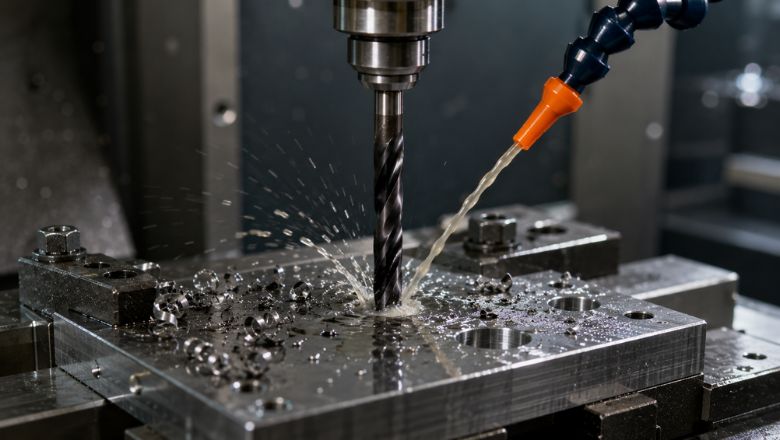
Best Drilling Inserts for Stainless Steel Machining
Stainless steel is one of the most challenging materials to machine. Its work-hardening nature, low thermal conductivity, and abrasive properties demand drilling inserts that are engineered specifically for the job. If you are using the wrong insert, you will face premature wear, poor surface finish, and costly downtime. This guide breaks down everything you need to know about choosing the best drilling inserts for stainless steel — from material grades and coatings to geometry and practical buying tips.
What are the best drilling inserts for stainless steel?
The best Drilling Inserts for stainless steel are carbide-grade inserts with PVD TiAlN or AlTiN coatings, sharp positive rake geometry, and chip-breaking grooves. Grades such as P25–P35 and M10–M25 (ISO classification) perform exceptionally well on austenitic stainless steels like SS304 and SS316. Jay Tech Tools, based in Ahmedabad, Gujarat, manufactures precision-engineered drilling inserts built specifically for stainless steel applications.
What Are Drilling Inserts?
Drilling inserts are replaceable cutting tips used in indexable drill bodies to create precise holes in metallic and non-metallic workpieces. Unlike solid carbide drills, indexable drilling inserts allow machinists to replace only the worn cutting edge — saving time and significantly reducing tooling costs.
Quick Fact: Indexable drilling inserts can reduce tooling cost per hole by up to 40% compared to solid drills in high-volume production environments.
In stainless steel machining, drilling inserts must handle extreme cutting forces, high temperatures at the cutting zone, and the material’s tendency to work-harden. This makes insert selection a critical decision — not just a procurement task.
Why Stainless Steel Is Difficult to Machine :
Understanding the material helps you choose the right insert.
Key Machining Challenges with Stainless Steel :
- Work hardening: Stainless steel hardens rapidly during cutting. A dull or slow insert worsens this effect and causes rapid tool failure.
- Low thermal conductivity: Heat generated during cutting stays concentrated at the cutting edge, accelerating insert wear.
- Built-up edge (BUE): Material tends to weld onto the cutting edge, deteriorating surface finish.
- Abrasiveness: Hard carbide inclusions in stainless steel act like microscopic abrasives against the insert.
The most commonly machined stainless grades in Indian manufacturing — SS304, SS316, SS410, and duplex SS2205 — each demand slightly different insert strategies.
Benefits of Using the Right Drilling Inserts :
- Longer tool life — Correct coating and substrate combination reduces wear by 30–60%
- Better surface finish — Ra values below 1.6 µm are achievable with wiper geometry
- Lower cutting forces — Sharp positive rake reduces spindle load and energy consumption
- Reduced scrap rate — Consistent hole tolerance throughout the batch
- Faster cycle time — Higher recommended cutting speeds with the right insert vs. a generic one
- Cost savings — Fewer tool changes, less downtime, lower per-piece cost
For a deeper understanding of how cutting tool selection impacts your productivity, read our Guide on Right CNC Cutting Tool for Maximum Productivity.
Applications :
Drilling inserts for stainless steel are used across these key industries in India:
- Oil & Gas: Valve bodies, flanges, pipe fittings (SS316, duplex)
- Pharmaceutical: Reactors, mixing vessels, piping (SS316L)
- Food Processing: Tanks, conveyors, fittings (SS304)
- Automotive: Exhaust components, sensor housings (SS409, SS430)
- Aerospace & Defence: Structural brackets, hydraulic components (SS17-4PH, SS15-5PH)
- Medical Devices: Implants, surgical instruments (SS316L, SS420)
- Architecture & Construction: Fasteners, structural profiles (SS304, SS316)
Industry Insight: India’s stainless steel consumption exceeded 4.5 million tonnes in FY2023–24, driven by infrastructure and pharmaceutical sector growth. This directly fuels demand for precision drilling tools across manufacturing clusters in Ahmedabad, Surat, and Rajkot.
Advantages and Disadvantages :
Advantages of Indexable Drilling Inserts :
- Lower cost per edge compared to solid drills
- Quick insert changeover without re-presetting the tool
- Multiple cutting edges per insert reduce waste
- Wide range of geometries available for specific materials
Disadvantages :
- Higher initial investment in drill bodies
- Requires correct body-insert matching — wrong combination reduces performance
- Center and peripheral inserts must be changed as a pair for best results
- Not ideal for very small diameter holes (below 12 mm — solid drills preferred)
Cost Factors :
The price of drilling inserts in India depends on:
- Insert material and coating — PVD-coated carbide inserts cost more upfront but offer better life
- Brand and origin — Imported inserts from Europe/Japan vs. quality Indian-manufactured inserts
- Insert geometry — Complex chip-breaker geometries are priced higher
- Quantity — Bulk purchasing reduces per-insert cost significantly
- Insert size/diameter compatibility — Larger drill sizes require larger inserts at higher prices
Maintenance Tips :
- Inspect inserts regularly — Check for flank wear, crater wear, or chipping after every 50–100 holes
- Use coolant correctly — Stainless steel drilling requires flood coolant or high-pressure through-tool coolant to manage heat
- Index before failure — Do not wait for catastrophic failure; index or replace at first sign of wear to avoid workpiece damage
- Store inserts properly — Keep unused inserts in original packaging; moisture and contamination affect coatings
- Clean insert seats — Chips trapped in the insert pocket cause seating errors and vibration
- Record tool life data — Track holes-per-edge to identify the optimal change interval for your application
Common Mistakes to Avoid :
- Using steel-turning inserts for drilling — These are not designed for the axial cutting forces in drilling
- Ignoring work hardening — Pausing mid-cut or dwelling in the hole causes rapid hardening and insert breakage
- Running too slow — Paradoxically, cutting too slow on stainless steel increases work hardening. Follow the manufacturer’s recommended cutting speed
- Neglecting coolant — Even “dry machining” inserts benefit from minimum quantity lubrication (MQL) on stainless steel
- Mixing center and peripheral inserts from different suppliers — Geometry mismatches lead to poor hole quality and premature failure
- Skipping the tool body inspection — A damaged insert pocket leads to vibration and rapid insert wear
Why Choose Jay Tech Tools?
Jay Tech Tools is a trusted manufacturer of precision cutting tools based in Ahmedabad, Gujarat — India’s industrial heartland.
What Sets Us Apart :
- Manufactured in India — All drilling inserts produced at our Ahmedabad facility under strict quality controls
- Application Engineering Support — Our technical team helps you select the right insert for your exact stainless steel grade and machining conditions
- Wide Product Range — Drilling inserts for diameters from 12 mm to 80 mm, covering all major stainless steel grades
- Consistent Quality — Every batch tested for hardness, coating adhesion, and dimensional accuracy
- Competitive Pricing — Indian manufacturing economics deliver premium performance at 20–35% lower cost than imported equivalents
- Fast Delivery — Stocked inserts dispatched within 24–48 hours across Gujarat; pan-India delivery available
- Trusted by Industry — Serving manufacturers in automotive, pharmaceutical, oil & gas, and food processing across Gujarat and beyond
Contact Jay Tech Tools today for a free technical consultation and sample inserts for your stainless steel application.
People Also Ask :
What is the best insert grade for drilling SS304 stainless steel?
M15 to M20 ISO-grade fine-grain carbide inserts with PVD TiAlN coating are the best choice for SS304. They balance hardness and toughness for the austenitic microstructure of 304.
Can I use the same insert for SS304 and SS316?
While both are austenitic grades, SS316 contains molybdenum making it slightly tougher and more abrasive. A M20 grade works for both; for pure SS316 production, an AlTiN coating improves insert life.
What cutting speed should I use for drilling stainless steel?
For carbide inserts, the recommended cutting speed for stainless steel is typically 60–120 m/min, depending on the grade. SS304 tolerates the higher end; duplex grades require the lower range with increased feed.
Should I use coolant when drilling stainless steel?
Yes. Flood coolant or high-pressure through-tool coolant is strongly recommended. It controls heat, improves chip evacuation, and extends insert life significantly.
What is the difference between center and peripheral drilling inserts?
Center inserts handle the core of the hole at low cutting speed and high axial pressure. Peripheral inserts handle the outer diameter at higher cutting speeds. They have different geometries and must be matched correctly.
Where can I buy quality drilling inserts in Ahmedabad, Gujarat?
Jay Tech Tools, based in Ahmedabad, manufactures and supplies a complete range of drilling inserts for stainless steel and other materials. Contact us for application-specific recommendations.
Expert :
Selecting the Best Drilling Insert for stainless steel is not guesswork — it is a structured decision based on workpiece alloy, machine capability, production volume, and surface finish requirements. The ideal insert combines fine-grain tungsten carbide substrate, advanced PVD coating (TiAlN or AlTiN), positive cutting geometry, and an effective chip-breaker.
Key Takeaways:
- ISO M-grade inserts (M10–M25) are the standard choice for austenitic stainless steels
- TiAlN coating is the reliable baseline; AlTiN for high-speed applications
- Never machine stainless steel dry — coolant is essential
- Avoid dwelling and slow cutting speeds — both cause work hardening
- Source from a manufacturer with application support, not just a catalogue
For manufacturers in Gujarat and across India, working with a local expert like Jay Tech Tools ensures you get technically correct inserts with fast support — reducing downtime and improving your bottom line.
Stainless steel machining demands precision — and that precision starts with the right drilling insert. From substrate selection and coating technology to geometry and chip control, every detail matters when you are pushing through SS316 at production rates.
Jay Tech Tools combines deep metallurgical knowledge with Indian manufacturing efficiency to deliver drilling inserts that perform where it counts — on the shop floor, in real production conditions.
Ready to improve your stainless steel drilling performance?
Get in touch with Jay Tech Tools in Ahmedabad for a free application consultation, technical data sheets, and competitive pricing on drilling inserts engineered for your exact needs.
FAQs :
What are the best drilling inserts for stainless steel machining?
The best drilling inserts for stainless steel are ISO M-grade carbide inserts (M10–M25) with a PVD TiAlN or AlTiN coating. These handle stainless steel’s work-hardening tendency and low thermal conductivity without premature wear. A positive rake geometry and chip-breaker groove further improve performance. Jay Tech Tools manufactures application-specific drilling inserts engineered for grades like SS304, SS316, and duplex stainless steel.
Which insert grade should I use for drilling SS316 stainless steel?
For drilling SS316 stainless steel, use an M20 or M25 ISO-grade carbide insert with an AlTiN nano-coating. SS316 contains molybdenum, making it tougher and more abrasive than SS304, so a slightly tougher grade with higher hot hardness performs best. Run at 70–90 m/min cutting speed with flood coolant to control heat and extend drilling insert life significantly.
Why do drilling inserts wear out so fast when machining stainless steel?
Drilling inserts wear quickly on stainless steel because the material work-hardens rapidly during cutting and generates intense heat at the cutting edge. Its low thermal conductivity traps that heat in the insert rather than dissipating it into the chip. Using the wrong grade, running too slow, or machining without coolant dramatically accelerates wear. A correctly specified TiAlN-coated insert with positive geometry solves this.
What coating is best for drilling inserts used on stainless steel?
TiAlN (Titanium Aluminium Nitride) is the most widely recommended coating for drilling inserts on stainless steel. It forms an aluminium oxide layer at high temperatures that acts as a thermal barrier, protecting the carbide substrate. For higher cutting speeds or tough duplex grades, AlTiN coating — with a higher aluminium content — offers superior hot hardness and oxidation resistance.
Should I use coolant when drilling stainless steel with carbide inserts?
Yes, always use coolant when drilling stainless steel with carbide inserts. Flood coolant or high-pressure through-tool coolant controls the cutting zone temperature, improves chip evacuation, and reduces the risk of built-up edge on the insert. Without coolant, stainless steel’s low thermal conductivity concentrates heat directly on the cutting edge, dramatically shortening insert life and risking sudden tool failure.
What is the difference between center and peripheral drilling inserts?
Center drilling inserts are positioned at the drill’s core and handle high axial pressure at near-zero cutting speed. Peripheral inserts sit at the outer diameter, operating at higher cutting speeds and determining hole size accuracy. Both have different geometries and must always be matched correctly — mismatching center and peripheral inserts causes vibration, poor hole quality, and rapid wear in stainless steel applications.
How do I stop stainless steel from work-hardening during drilling?
Prevent work-hardening during stainless steel drilling by maintaining the correct cutting speed (60–120 m/min for carbide inserts), using a sharp positive-rake drilling insert, and avoiding any mid-cut pauses or dwelling in the hole. A dull or slow insert rubs instead of cutting, generating friction that hardens the surface layer. Jay Tech Tools recommends replacing inserts at first signs of wear — not after failure.
What cutting speed should I use for drilling inserts on stainless steel?
For carbide drilling inserts on stainless steel, a cutting speed of 60–120 m/min is the recommended range. SS304 tolerates the upper end; SS316 and duplex grades work better at 70–90 m/min. Feed rates of 0.08–0.25 mm/rev suit most applications. Running too slow is as damaging as running too fast — low speed increases work-hardening and reduces insert life.
Can I use the same drilling inserts for SS304 and SS316 stainless steel?
An M20-grade carbide drilling insert works acceptably for both SS304 and SS316, but it is not ideal for high-volume SS316 production. SS316’s molybdenum content makes it more abrasive and heat-resistant. For dedicated SS316 machining, upgrading to an AlTiN-coated M20 or M25 insert improves tool life by 25–40%. Jay Tech Tools supplies grade-specific inserts for both stainless alloys.
Where can I buy high-quality drilling inserts for stainless steel in Gujarat?
Jay Tech Tools, based in Ahmedabad, Gujarat, manufactures and supplies precision drilling inserts specifically engineered for stainless steel machining. Their inserts are available in M10–M25 and S-grade carbide with TiAlN and AlTiN coatings, covering drill diameters from 12 mm to 80 mm. With fast delivery across Gujarat and pan-India shipping, Jay Tech Tools is a trusted source for cutting tools in India’s industrial corridor.