
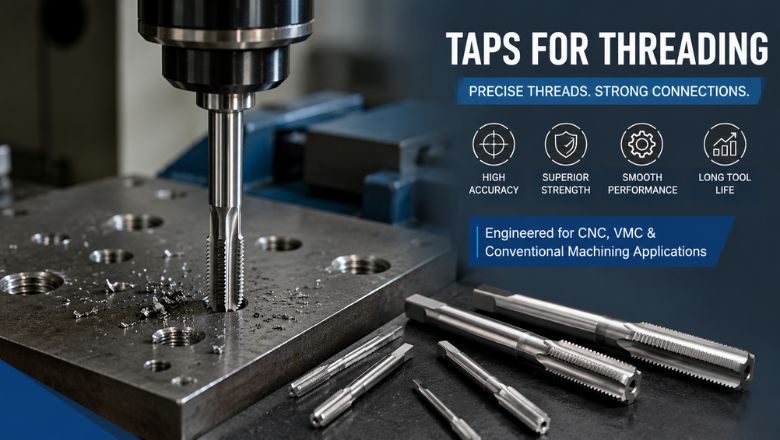
Taps for Threading: Types, Applications & Selection for Precision Machining
When accurate internal threads are required in metal components, Taps for Threading are one of the most important cutting tools used in machining. From CNC and VMC machines to conventional workshop operations, the right tap helps produce consistent internal threads for bolts, screws, studs and other threaded components.
However, choosing a threading tap is not simply about selecting the correct diameter. Thread size, pitch, workpiece material, hole type, tapping method and chip evacuation all influence the final result. Different tap geometries are designed for different machining conditions, which is why understanding the application is essential before selecting a tool.
Jay Tech Tools supplies threading tools for industrial machining requirements in Ahmedabad and across Gujarat, helping manufacturers and machine shops select suitable taps according to their application.
What Are Taps for Threading?
A threading tap is a cutting or forming tool used to create internal threads inside a pre-drilled hole. During tapping, the tool enters the prepared hole and produces the required thread profile so that a matching bolt or screw can be securely assembled.
Threading taps are available in different geometries, materials, sizes and thread standards. For a closer look at available options and industrial applications, explore our range of Taps for Threading. Common requirements include Metric, UNC, UNF and other industrial thread forms, depending on the component and application.
For production machining, selecting a tap according to the workpiece and hole geometry is particularly important because incorrect tool selection can result in poor thread quality, excessive torque or tap breakage.
Common Types of Taps for Threading :
The correct tap depends heavily on how and where the thread needs to be produced.
1. Straight Flute Taps :
Straight flute taps are commonly used for general-purpose tapping and are suitable for several conventional machining applications. Their straight flutes provide a relatively simple cutting geometry and can be useful where chip evacuation is manageable.
2. Spiral Flute Taps :
Spiral flute taps are particularly useful for blind-hole threading. Their helical flute geometry helps pull chips out of the hole rather than allowing them to accumulate at the bottom. This makes them a practical choice when threads are required deeper inside blind holes.
3. Spiral Point Taps :
Also known as gun taps, spiral point taps are commonly selected for through-hole applications. Their geometry pushes chips forward and away from the cutting area, helping improve chip control during production tapping.
4. Forming or Roll Taps :
Unlike cutting taps, forming taps create threads by displacing and forming the material rather than removing chips. They can be suitable for certain ductile materials, provided the pre-drilled hole diameter and material properties are appropriate.
5. Hand Taps :
Hand taps are generally used for manual threading operations and are commonly available in taper, plug and bottoming configurations. Taper taps make starting easier, while bottoming taps are useful when threads must extend closer to the bottom of a blind hole.
Tap geometry should be matched to the hole type and chip-flow requirements, as explained in technical tooling guidance from Sandvik Coromant.
How to Select the Right Threading Tap :
Before purchasing a threading tap, machinists should evaluate several parameters:
- Workpiece material: Steel, stainless steel, aluminium, cast iron and other materials have different cutting characteristics.
- Thread specification: Confirm the required diameter, pitch and thread standard.
- Hole type: Determine whether the component has a through hole or blind hole.
- Tapping machine: CNC, VMC, tapping machine or manual operation may require different tap geometries.
- Thread depth: Deep blind holes require particular attention to chip evacuation.
- Coolant and lubrication: Proper lubrication can help control heat, friction and tool wear.
- Production volume: High-volume machining may require a more application-specific tap rather than a general-purpose option.
A simple rule is: select the tap based on the machining condition, not only the thread size.
Taps for CNC and VMC Threading :
In CNC and VMC machining, tapping is often performed repeatedly with controlled spindle speed and feed. This makes tool geometry, synchronization and chip evacuation especially important.
Before tapping, producing the correct pilot hole is equally important; selecting the appropriate HSS Drill Bit helps achieve the required hole diameter for consistent threading.
For example, a spiral flute tap can be considered for blind holes where chips need to move out of the hole, while a spiral point tap can be suitable for many through-hole production applications. The final selection should always be matched to the material, hole geometry and machine conditions.
At Jay Tech Tools, customers can discuss their actual machining requirement before selecting a suitable threading tap. This application-focused approach is particularly useful for manufacturers dealing with different materials, thread sizes and production volumes.
For a deeper understanding of how tap quality affects thread accuracy, tool life and machining consistency, read our guide on Why High-Quality Threading Taps Are Essential for Precision Machining Operations.
Where Are Threading Taps Used?
Taps for threading are widely used in:
- CNC machining
- VMC machining
- Automotive component manufacturing
- General engineering
- Fabrication and machine shops
- Industrial equipment manufacturing
- Hydraulic and pneumatic components
- Precision component production
- Tool and die applications
- Maintenance and repair operations
The required tap specification can vary significantly between these applications, so identifying the exact machining requirement is an important first step.
Why Choose Jay Tech Tools for Threading Taps?
For manufacturers and machining companies looking for Threading Taps in Ahmedabad and Gujarat, Jay Tech Tools focuses on supplying suitable cutting tools for practical industrial applications.
Instead of selecting a tap only by size, customers can consider factors such as material, thread standard, hole type, machine and production requirement. This helps make the tooling decision more application-specific and can support consistent threading performance.
If you need the right Taps for Threading for CNC, VMC or conventional machining, connect with Jay Tech Tools for product availability and application-based assistance.
Need the Right Taps for Threading?
Get the right threading tap for your material, thread size, and machining application. Choose reliable tooling support from Jay Tech Tools for CNC, VMC, and industrial threading requirements.
Contact Jay Tech Tools today for the right threading tap for your application.
FAQs :
What are taps for threading used for?
Taps for threading are cutting or forming tools used to create internal threads inside pre-drilled holes. They are commonly used in CNC, VMC and conventional machining for producing threads for bolts, screws, studs and other threaded components.
How do I choose the right tap for threading?
The right threading tap depends on the workpiece material, thread diameter, pitch, thread standard, hole type, thread depth and machining method. For example, blind-hole and through-hole applications may require different tap geometries for effective chip evacuation.
Which threading tap is best for CNC and VMC machines?
There is no single tap that is best for every CNC or VMC application. Spiral flute taps are commonly considered for blind holes, while spiral point taps are often suitable for through-hole applications. The final choice should be based on material, machine conditions, hole depth and required thread quality.
What is the difference between spiral flute and spiral point taps?
Spiral flute taps generally help move chips backward and are particularly useful for blind-hole threading. Spiral point taps are designed to push chips forward and are commonly used for through holes. Selecting between them depends mainly on the hole type and chip evacuation requirements.
Can HSS taps be used for industrial threading applications?
Yes. HSS (High-Speed Steel) taps are widely used for many industrial threading applications because they offer a practical combination of hardness, toughness and wear resistance. However, the suitable HSS tap grade and geometry should be selected according to the workpiece material and machining conditions.
Which tap should I use for blind holes?
For many blind-hole applications, a spiral flute tap can be a suitable choice because its flute geometry helps evacuate chips from the hole. For deeper or difficult-to-machine holes, tap selection should also consider material, thread depth, lubrication and machine parameters.
What causes a threading tap to break?
Tap breakage can occur because of incorrect tapping speed, improper hole diameter, excessive torque, poor chip evacuation, insufficient lubrication, misalignment or using an unsuitable tap for the material. Checking the drilled-hole size and matching the tap geometry to the application can help reduce these problems.
What size should the hole be before using a threading tap?
The required pre-drilled hole size depends on the thread diameter, pitch, thread standard and tapping method. Using an incorrect drill size can affect thread depth, cutting torque and tap life. Machinists should refer to the appropriate tap drill chart or tooling specification for the exact thread.
Where can I buy Taps for Threading in Ahmedabad or Gujarat?
Industrial threading taps can be sourced from Jay Tech Tools, which supplies threading tools for machining requirements in Ahmedabad and Gujarat. Customers can specify the required thread size, pitch, material and application to identify a suitable tooling option.
How can I select the right threading tap for my machining application?
Start by identifying the material, thread specification, hole type, thread depth and machine type. Then consider the appropriate tap geometry, HSS grade, coating, lubrication and operating conditions. For application-specific requirements, consulting an experienced tooling supplier such as Jay Tech Tools can help narrow down the suitable option.