
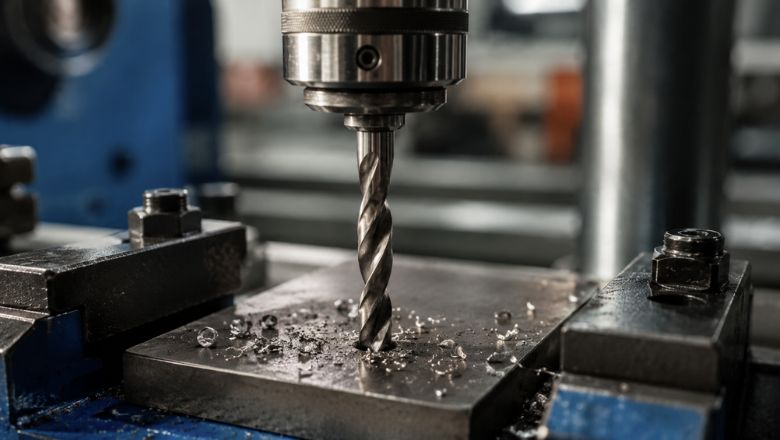
HSS Drill Bits: Types, Sizes, Materials, Coatings and Industrial Applications
When a drilling job demands clean holes, consistent accuracy and dependable cutting performance, the choice of drill bit matters more than it may seem. Among the many options available, HSS Drill Bits remain a widely used solution for workshops, fabrication units, engineering industries and general metalworking applications. For a closer look at the available HSS Drill Bits, explore Jay Tech Tools’ range of precision drilling tools designed for different industrial requirements.
HSS stands for High-Speed Steel, a tool steel developed to retain hardness and cutting ability even when drilling generates considerable heat. But not every HSS drill bit is identical. The steel grade, flute design, point angle, surface coating and manufacturing quality can all influence how a bit behaves on the job.
For businesses looking for dependable drilling tools, understanding these differences is essential. Jay Tech Tools focuses on precision tooling solutions designed around practical machining requirements, helping users select the right HSS drill bits for different drilling conditions.
What Are HSS Drill Bits Made Of?
HSS drill bits are manufactured from high-speed tool steels containing alloying elements such as chromium, tungsten, molybdenum, vanadium and, in certain grades, cobalt. These elements improve hardness, wear resistance and the ability of the cutting edge to withstand elevated temperatures.
Common HSS grades include M2 and M35, with M35 generally containing cobalt for improved hot hardness. This makes cobalt HSS drill bits particularly useful when drilling tougher materials or when the application produces substantial heat.
The material composition is therefore not just a technical specification. It directly affects tool life, cutting performance and the type of material the drill bit can handle efficiently.
HSS Drill Bit Types Used in Machining :
The term HSS drill bit covers several configurations rather than one single product.
HSS twist drill bits are among the most common. Their helical flutes help remove chips from the hole while the cutting edges gradually penetrate the workpiece. They are widely used for drilling metals, plastics and other engineering materials.
Cobalt HSS drill bits are designed for applications where higher heat resistance and cutting durability are required. They are often considered for stainless steel and other difficult-to-machine alloys.
There are also HSS drill bits available with different point geometries and surface treatments. Choosing the correct configuration can make a noticeable difference in drilling speed, hole quality and tool life.
Understanding HSS Drill Bit Sizes and Point Angles :
HSS drill bits are available in a broad range of diameters, from small precision sizes to larger industrial dimensions. Metric and imperial sizes are commonly available, while specialized requirements may call for specific diameter tolerances.
The point angle is another important specification. A standard 118° point is commonly associated with general-purpose drilling, while a 135° split point is often preferred where easier starting and reduced walking are important. For standardized information on high-speed steel tool materials and specifications, readers can also refer to the ASTM International standards and technical resources relevant to tool steels.
This distinction becomes particularly useful when working with harder metals, sheet materials or precision components. The correct geometry helps the cutting edges engage the material efficiently rather than forcing the operator to compensate through excessive pressure.
HSS Drill Bit Coatings and Surface Finishes :
Coatings can change how an HSS drill bit performs under demanding conditions. Depending on the application, manufacturers may offer finishes or coatings such as black oxide, TiN and other specialized surface treatments.
Black oxide can provide improved surface durability and corrosion resistance compared with plain bright-finish tooling. TiN-coated HSS drill bits, recognized by their characteristic gold appearance, can offer increased wear resistance in suitable applications.
However, coating alone does not determine performance. The underlying HSS grade, geometry, manufacturing precision and cutting parameters all need to work together.
Where Are HSS Drill Bits Used?
HSS drill bits are used across a wide range of industries because they can be matched to different materials and machining requirements. Typical applications include fabrication, automotive components, engineering workshops, machinery manufacturing, maintenance work, sheet-metal operations and general industrial production.
They are commonly selected for materials such as mild steel, carbon steel, aluminium, brass and certain stainless-steel grades, depending on the drill specification and operating conditions.
For production environments, factors such as spindle speed, feed rate, coolant, material hardness and hole depth should be considered together rather than treating the drill bit as an isolated component.
Why Drill Bit Quality Matters :
A poorly manufactured drill bit may show uneven cutting, premature edge wear, excessive heat generation or inconsistent hole dimensions. In production work, these problems can quickly translate into higher tooling costs and unnecessary downtime.
Precision-ground HSS Drill Bits can provide better dimensional consistency and cutting geometry when manufactured to appropriate standards. For professional users, specifications should therefore be evaluated alongside the supplier’s manufacturing capability and quality-control practices.
Jay Tech Tools understands that industrial tooling is not simply about supplying a cutting tool. The right specification has to match the material, machine, hole requirement and working environment. For machining applications that require replaceable cutting solutions, Drilling Inserts can offer a different tooling approach depending on the machine setup, workpiece and cutting requirements.
Choosing the Right HSS Drill Bit for Your Application :
Before selecting an HSS drill bit, consider the workpiece material, required hole diameter, drilling depth, machine type, operating speed and desired hole finish. If you want to compare different configurations in greater detail, our guide to HSS Drill Bit: Types, Sizes, Materials & Applications covers the key specifications and application considerations. For tougher materials, a cobalt HSS option may be more appropriate. For general workshop drilling, a standard HSS twist drill can often provide the required performance.
The objective is simple: match drill geometry, HSS grade, size and coating with the actual machining condition.
If you are looking for precision HSS drilling tools for industrial, workshop or engineering applications, explore Jay Tech Tools’ range of HSS solutions and find the specification suited to your drilling requirements. The right bit is a small component, but in precision machining, small details make a big difference.
Choose the Right HSS Drill Bits with Jay Tech Tools :
Need reliable HSS Drill Bits for your machining or industrial application? Get the right size, grade and specification for your requirements.
Talk to Jay Tech Tools today and find the right drilling solution for your application.
FAQs :
What are HSS Drill Bits used for?
HSS Drill Bits are primarily used for drilling holes in materials such as mild steel, carbon steel, aluminium, brass and selected stainless-steel grades. Their high-speed steel construction provides the hardness and heat resistance required for general workshop, fabrication and industrial machining applications.
Which HSS Drill Bit is suitable for stainless steel?
For stainless steel and other difficult-to-machine materials, cobalt HSS drill bits, such as M35-grade options, are often considered because they provide improved hot hardness compared with standard HSS. The correct point geometry, cutting speed, feed and coolant are equally important for achieving consistent drilling performance.
What is the difference between HSS and cobalt HSS Drill Bits?
Standard HSS Drill Bits are suitable for many general-purpose drilling applications, while cobalt HSS Drill Bits contain cobalt as part of the tool-steel composition and offer improved resistance to heat and wear. Cobalt HSS is generally more suitable for demanding applications involving harder or heat-generating materials.
What does M2 or M35 mean in HSS Drill Bits?
M2 and M35 refer to different high-speed steel grades. M2 HSS is a widely used general-purpose tool-steel grade, while M35 HSS contains cobalt and is designed for greater hot-hardness and demanding drilling conditions. The appropriate grade should be selected according to the workpiece material and machining requirements.
What point angle is commonly used for HSS Drill Bits?
A 118° point angle is widely used for general-purpose HSS drilling. A 135° split-point design can offer easier starting and reduced drill walking, particularly in applications where accurate hole positioning is important. The ideal geometry depends on the material, machine and drilling conditions.
Are HSS Drill Bits available in different sizes?
Yes. HSS Drill Bits are manufactured in a wide range of diameters and are commonly available in metric and imperial sizes. Selection should be based on the required hole diameter, dimensional tolerance, material thickness and machine capability rather than choosing a size only by visual comparison.
How can the quality of an HSS Drill Bit be evaluated?
Quality should be assessed through factors such as the HSS grade, dimensional accuracy, cutting-edge geometry, flute consistency, surface finish, point symmetry and manufacturing quality. For industrial applications, supplier consistency and quality-control practices are also important because variations in geometry can affect hole accuracy and tool life.
Can HSS Drill Bits be used for industrial machining?
Yes. HSS Drill Bits are widely used in engineering workshops, fabrication, machinery manufacturing, maintenance, automotive-component production and other industrial applications. The appropriate HSS grade, drill geometry and operating parameters should be selected according to the specific material and production requirement.
What factors affect the performance of HSS Drill Bits?
Performance depends on several interacting factors, including workpiece material, drill diameter, HSS grade, point geometry, spindle speed, feed rate, drilling depth, lubrication or coolant and machine rigidity. Even a high-quality HSS Drill Bit can wear prematurely if the cutting parameters are unsuitable for the material.
How do I choose the right HSS Drill Bit for my application?
Start with the workpiece material and required hole diameter, then consider the drilling depth, machine type, operating conditions, required accuracy and production volume. For demanding materials, a cobalt HSS option may be appropriate, while standard HSS can suit many general-purpose applications. For professional tooling selection, discussing the actual machining requirement with an experienced tool supplier such as Jay Tech Tools can help identify the appropriate specification.