Pipe Taps for Industrial Threading: Choosing the Right Tap for Pipe Threads
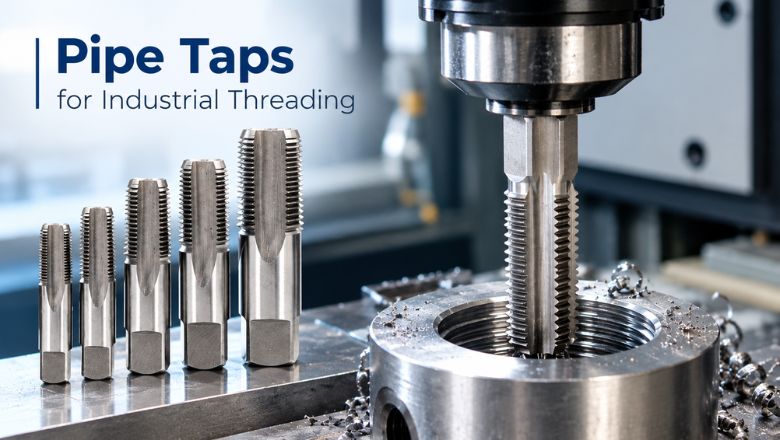
When pipe threads have to be clean, accurate, and consistent, the tap you use matters more than it may seem. A poorly matched tap can lead to incomplete threads, difficult assembly, leakage at the joint, or unnecessary tool wear. That is why Pipe Taps are commonly selected according to the pipe standard, thread profile, material being machined, and the required production accuracy.
For workshops and industrial machining operations, choosing the correct Pipe Tap is not simply about finding a tap that matches the nominal pipe size. The thread standard and application have to match as well.
Jay Tech Tools supplies industrial cutting tools for machining applications, with Pipe Taps suitable for operations where dependable internal pipe threading is required.
Where Are Pipe Taps Used?
Pipe Taps are used to create internal threads in components that need to accept threaded pipes, fittings, plugs, or other threaded connections. Their applications can be found across engineering workshops, fabrication units, automotive components, hydraulic equipment, pneumatic systems, valves, pumps and general industrial machinery.
The requirement changes from one application to another. A workshop machining a steel fitting may have very different tooling requirements from a manufacturer producing aluminium housings or cast components.
This is where selecting the right Pipe Tap becomes important.
Pipe Thread Size Is Not the Only Specification :
One of the common mistakes during tool selection is checking only the pipe size. For example, a tap may be intended for a particular nominal pipe size, but the actual thread specification can still differ.
Before ordering a Pipe Tap, it is worth checking:
- Pipe thread standard and designation
- Nominal pipe size
- Thread pitch or threads per inch, where applicable
- Workpiece material
- Blind or through-hole application
- Required thread depth
- Machine and tapping method
- Required thread accuracy and surface finish
The distinction between standards such as BSP, BSPT, and NPT is especially important. These are not interchangeable simply because the nominal size appears similar.
BSP, BSPT and NPT: Why the Difference Matters :
Pipe threading often involves standards that look similar on paper but produce different thread forms or connection characteristics.
BSP (British Standard Pipe) threads are widely used in many industrial applications, particularly in markets where British pipe-thread standards are common. Depending on the application, BSP parallel or tapered configurations may be required.
BSPT (British Standard Pipe Taper) uses a tapered thread and is commonly associated with pipe connections where the thread itself contributes to sealing.
NPT (National Pipe Taper) is another tapered pipe-thread standard, widely used in equipment and components following American specifications.
Using the wrong standard can result in poor engagement even when the tap appears to be the correct nominal size. For production work, confirming the exact thread specification before purchasing the tool can prevent costly rework.
For Indian applications, manufacturers can also refer to the Bureau of Indian Standards (BIS) specifications for pipe-thread dimensions, tolerances and designation.
Choosing Pipe Taps for Different Workpiece Materials :
The workpiece material also affects tap selection and machining performance.
Carbon steel and alloy steel generally require cutting tools capable of handling higher cutting forces. Stainless steel can be more demanding because of its toughness and tendency to work-harden when machining conditions are not controlled properly.
Aluminium and other softer alloys behave differently. Chip evacuation, cutting geometry, and lubrication can influence the quality of the finished internal thread.
For this reason, a Pipe Tap should be considered as part of the complete machining process rather than as an isolated tool. Along with threading tools, machining operations may also require application-specific cutting tools such as Drilling Inserts for preparing accurate holes before tapping.
Pipe Taps for CNC and Conventional Machines :
Pipe threading operations can be performed on conventional machines as well as CNC equipment. In CNC production, consistency becomes particularly important because the same threading operation may be repeated across hundreds or thousands of components.
Correct tool selection, tapping speed, feed synchronization, and suitable cutting fluid all contribute to repeatable results.
For manual or conventional machining, operator control and alignment become especially important. A high-quality tap cannot compensate for incorrect alignment or unsuitable machining conditions.
For a broader look at threading-tool selection and machining applications, see our article on Taps for Threading: Types, Applications & Selection for Precision Machining.
What Should You Check Before Buying Pipe Taps?
If you are sourcing Pipe Taps for regular industrial production, give the supplier the actual machining requirement rather than asking only for a nominal size.
Share the pipe thread standard, size, workpiece material, tapping depth, machine type, and application. This gives the tooling supplier enough information to recommend a suitable option.
At Jay Tech Tools, the focus is on supplying machining tools according to practical industrial requirements. If you are unsure whether you need BSP, BSPT, NPT, or another specification, confirming the thread standard before placing an order is a simple step that can save both machining time and tooling cost.
Pipe Taps Supplier for Industrial Machining Applications :
The right Pipe Tap should produce the required thread accurately while fitting the material, machine, and production process. That combination is what determines whether a tapping operation runs smoothly or becomes a recurring source of rejection and tool replacement.
For workshops, manufacturers, and machining units looking for Pipe Taps in Gujarat, Jay Tech Tools can assist with industrial tooling requirements based on the application and thread specification.
If you are planning to purchase Pipe Taps, provide your required thread size and standard along with the workpiece material. This makes it easier to identify the appropriate tooling for your application and avoid ordering a tap based on size alone.
Need the Right Pipe Taps for Your Application?
Get Pipe Taps from Jay Tech Tools based on your required thread size, standard, and workpiece material.
Contact us today for the right industrial tapping solution.
FAQs :
What are Pipe Taps used for?
Pipe Taps are used to create accurate internal pipe threads in components such as fittings, valves, pumps, hydraulic parts, pneumatic components, and other industrial assemblies. The correct tap is selected according to the required pipe thread standard, size, workpiece material, and machining application.
How do I choose the right Pipe Tap for my application?
Start by confirming the thread standard, nominal pipe size, workpiece material, thread depth, and machine type. Standards such as BSP, BSPT, and NPT have different specifications, so the nominal pipe size alone should not be used to select a tap. Sharing these details with a tooling supplier helps avoid incorrect tool selection.
What is the difference between BSP, BSPT and NPT Pipe Taps?
BSP, BSPT, and NPT refer to different pipe-thread specifications. BSP can refer to British Standard Pipe threads, while BSPT specifies a tapered British pipe thread. NPT is a tapered pipe-thread standard commonly used for components following American specifications. These thread systems should not be treated as interchangeable simply because their nominal sizes appear similar.
Can Pipe Taps be used for CNC machining?
Yes. Pipe Taps can be used in CNC machining operations when the tap specification, machine setup, tapping cycle, speed, feed, and workpiece material are correctly matched. For repetitive production, proper tool selection and consistent machining parameters are particularly important for maintaining thread quality.
Which Pipe Taps are suitable for stainless steel?
The suitable Pipe Tap depends on the specific stainless-steel grade, tapping depth, machine, and production conditions. Stainless steel can be demanding because some grades are tough and may work-harden when machining conditions are unsuitable. Tool geometry, lubrication, and controlled cutting parameters should therefore be considered along with the tap specification.
What information should I provide when buying Pipe Taps?
For an accurate recommendation, provide the pipe thread standard, thread size, workpiece material, tapping depth, hole type, machine type, and application. If available, sharing the required drawing or thread specification with the supplier can make tool selection more precise.
Why is the correct thread standard important when selecting a Pipe Tap?
The thread standard determines the geometry and specification of the finished internal thread. Using a tap intended for a different standard can result in poor thread engagement, incorrect fitting compatibility, or assembly problems. Confirming the required standard before purchasing is therefore an important part of industrial tool selection.
Can one Pipe Tap be used for different pipe thread standards?
Generally, no. A Pipe Tap designed for one thread standard should not be assumed to produce another standard correctly. For example, BSPT and NPT are different tapered thread systems. The tap should match the exact thread specification required by the component or mating fitting.
Where can I buy Pipe Taps for industrial applications in Gujarat?
Industrial Pipe Taps can be sourced from specialised cutting-tool suppliers that can match the tap to the required thread specification and machining application. Jay Tech Tools supplies industrial machining tools and can assist buyers looking for Pipe Taps based on thread size, standard, material, and application requirements.
How can I get the right Pipe Tap from Jay Tech Tools?
Share your required pipe thread standard, size, workpiece material, tapping depth, and machine details with Jay Tech Tools. Based on the application requirements, the appropriate Pipe Tap specification can be identified before you place your order.