
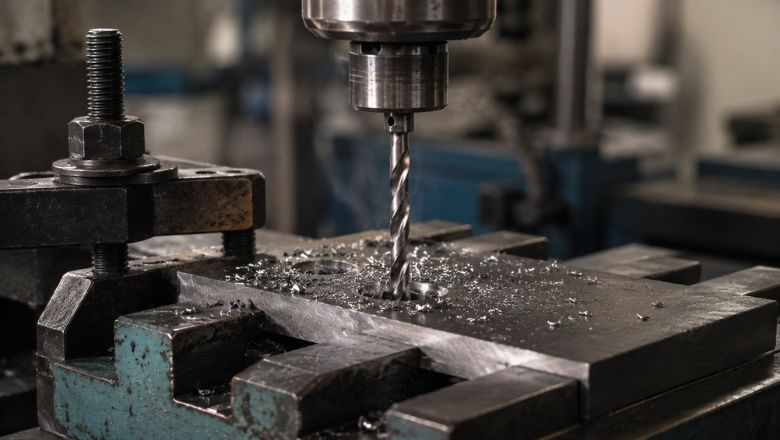
How to Choose the Right HSS Drill Bit for Metal Drilling
Selecting the right HSS Drill for metal drilling is essential for achieving accurate holes, longer tool life, and improved productivity. Whether you are working with mild steel, stainless steel, aluminum, or other metals, the correct High-Speed Steel (HSS) drill bit can significantly impact drilling speed, precision, and overall performance. Understanding factors such as material type, coating, drill point angle, and application requirements helps buyers make informed decisions and avoid costly mistakes.
To choose the right HSS Drill for metal drilling, consider the metal type, drill bit grade, coating, point angle, size requirements, and drilling frequency. For harder metals, use cobalt-enhanced HSS drills, while standard HSS drills work well for softer metals like aluminum and mild steel.
What is an HSS Drill?
An HSS (High-Speed Steel) Drill is a cutting tool designed to create holes in metal, plastic, and other materials. HSS drill bits are manufactured from high-speed steel, allowing them to withstand elevated temperatures generated during drilling while maintaining hardness and cutting efficiency.
Key Characteristics :
- Heat-resistant construction
- High wear resistance
- Long service life
- Suitable for industrial and workshop applications
- Available in multiple coatings and grades
Key Features of HSS Drill Bits :
High Temperature Resistance :
HSS drills retain hardness even at high drilling temperatures.
Excellent Durability :
Designed for repetitive industrial use with reduced wear.
Versatile Performance :
Can drill various materials including steel, cast iron, brass, and aluminum.
Precision Drilling :
Provides clean and accurate holes with minimal deviation.
Benefits of Using HSS Drills :
HSS drills offer durability, precision, cost-effectiveness, and versatility for most metal drilling applications.
Advantages :
- Longer tool life
- Faster drilling speeds
- Improved hole accuracy
- Lower replacement costs
- Suitable for manual and CNC operations
Disadvantages :
- Standard HSS may wear faster in hardened steel
- Requires proper lubrication for optimal life
- Lower performance than carbide in extreme applications
Applications of HSS Drill Bits :
HSS drills are widely used in:
- Manufacturing industries
- Fabrication workshops
- Automotive components
- Aerospace parts
- Construction equipment
- Maintenance and repair operations
- CNC machining centers
According to industry reports, metalworking operations account for a significant portion of industrial drilling demand, making drill bit selection a critical productivity factor.
In many manufacturing and fabrication processes, drilling is often followed by threading operations using precision Threading Taps to create accurate internal threads.
HSS Drill Comparison Table :
| Feature | Standard HSS | HSS-Co | TiN Coated HSS |
|---|---|---|---|
| Heat Resistance | Good | Excellent | Very Good |
| Wear Resistance | Good | Excellent | Very Good |
| Cost | Low | Medium | Medium |
| Stainless Steel Drilling | Moderate | Excellent | Good |
| Tool Life | Standard | Long | Extended |
Common Mistakes to Avoid :
Most drilling failures occur because of incorrect drill selection, excessive speed, or inadequate lubrication.
Common errors include:
- Using the wrong drill size
- Excessive spindle speed
- Lack of coolant or cutting fluid
- Applying too much pressure
- Ignoring drill wear
Drill bit selection is only one part of machining efficiency. Understanding overall cutting tool selection can further improve productivity, tool life, and machining performance.
Maintenance Tips :
To maximize HSS drill life:
- Store drills properly.
- Use cutting fluids when drilling metal.
- Sharpen dull drill bits regularly.
- Operate at recommended speeds and feeds.
- Clean chips frequently during drilling.
Proper maintenance can significantly extend tool lifespan and reduce operating costs.
Industry Trends :
Modern metalworking industries are increasingly adopting:
- Advanced coated HSS drills
- Precision CNC drilling operations
- High-performance cobalt drill bits
- Tool life monitoring systems
- Productivity-focused cutting tool solutions
Manufacturers continue to improve drill geometries to achieve faster cutting speeds and longer service life.
Indian manufacturers are increasingly adopting advanced tooling technologies and quality standards to improve production efficiency and competitiveness.
Why Choose Jay Tech Tools?
Jay Tech Tools is committed to delivering high-quality industrial drilling solutions for customers in Ahmedabad, Gujarat, and across India.
Our Strengths :
- Premium-quality HSS drills
- Consistent manufacturing standards
- Reliable performance
- Competitive pricing
- Technical product guidance
- Fast customer support
Our expertise helps industries select the right drilling tools for improved productivity and reduced downtime.
Businesses should also consider industry-recognized quality standards and best practices when selecting metal cutting tools for industrial applications.
People Also Ask :
Which HSS drill is best for stainless steel?
HSS-Co (Cobalt HSS) drill bits are generally recommended because they offer superior heat resistance and durability.
What is the difference between HSS and carbide drills?
HSS drills are more economical and versatile, while carbide drills offer higher hardness and performance for demanding applications.
Can HSS drills be used for aluminum?
Yes. HSS drills perform exceptionally well on aluminum when proper speeds and lubrication are used.
How long do HSS drill bits last?
Tool life depends on material, speed, lubrication, and maintenance practices. Properly maintained HSS drills can provide extended service life.
The right HSS Drill depends on the material being drilled, required hole quality, operating conditions, and production volume.
For most metal drilling applications:
- Use standard HSS for general-purpose work.
- Use HSS-Co for stainless steel and harder metals.
- Select appropriate coatings for longer tool life.
- Match drill geometry to the application.
- Follow proper maintenance practices.
Choosing the right HSS Drill is crucial for achieving efficient, accurate, and cost-effective metal drilling. By considering material type, drill grade, coating, point angle, and maintenance requirements, buyers can significantly improve productivity and tool life. Whether you operate a fabrication workshop, manufacturing facility, or CNC machining center, investing in the right drill bit delivers long-term value.
Ready to Choose the Right HSS Drill for Your Application?
Selecting the right HSS Drill can directly impact drilling accuracy, tool life, production efficiency, and overall operating costs. Whether you need standard HSS drills for general metalworking or high-performance cobalt drills for demanding applications, choosing the correct tool is essential for achieving the best results.
At Jay Tech Tools, we help manufacturers, fabrication workshops, engineering companies, and industrial buyers find the most suitable drilling solutions for their specific requirements.
- Premium Quality HSS Drill Bits
- Expert Technical Guidance
- Reliable Industrial Performance
- Competitive Pricing
- Fast Support & Product Recommendations
Need help selecting the right HSS Drill?
Contact Jay Tech Tools today and get expert assistance in choosing the ideal drill bit for your metal drilling application. Our team will help you improve productivity, reduce tool wear, and achieve superior drilling performance.
Get Started Today :
Don’t let the wrong drill bit slow down your operations. Reach out to Jay Tech Tools and discover high-performance HSS drilling solutions designed to deliver precision, durability, and long-term value for your business.
FAQs :
How Do I Choose the Right HSS Drill for Metal Drilling?
The right HSS Drill depends on the type of metal, drilling frequency, required hole accuracy, and operating conditions. Standard HSS drills work well for mild steel and aluminum, while cobalt-enhanced HSS drills are better suited for stainless steel and harder metals due to their superior heat resistance and durability.
- Match the drill bit to the material being drilled.
- Consider drill coating and point angle.
- Use cobalt HSS drills for hard metals.
- Select the correct size and tolerance.
- Evaluate operating speed and coolant requirements.
Choosing the correct HSS Drill begins with understanding the workpiece material. For example, a fabrication shop drilling mild steel brackets may achieve excellent results with standard HSS drills. However, manufacturers working with stainless steel components often require HSS-Co drills because they maintain hardness at higher temperatures.
Another important factor is drill geometry. A 118-degree point angle is suitable for general-purpose drilling, while a 135-degree split point reduces walking and improves accuracy in harder materials.
Coatings such as Titanium Nitride (TiN) can extend tool life by reducing friction and heat generation. Buyers should also consider production volume. A drill bit used occasionally in maintenance work may have different requirements than one operating continuously in a CNC machine.
At Jay Tech Tools, customers are encouraged to evaluate application requirements before selecting an HSS Drill to ensure maximum productivity and cost efficiency.
Always test a drill bit on the actual material before large-scale production to verify performance and hole quality.
Selecting an HSS Drill based on material type and operating conditions improves performance and tool life.
What Is the Difference Between HSS and Cobalt HSS Drills?
Standard HSS drills are versatile and cost-effective for general metal drilling, while cobalt HSS drills contain additional cobalt that improves heat resistance and durability. Cobalt drills are preferred for stainless steel, hardened alloys, and high-temperature drilling applications.
- Standard HSS is suitable for general-purpose drilling.
- Cobalt HSS offers greater heat resistance.
- Cobalt drills last longer in hard metals.
- HSS drills are more economical.
- Application determines the best choice.
Many buyers assume all HSS Drill bits perform similarly, but material composition makes a significant difference. Standard HSS drills are ideal for mild steel, aluminum, brass, and general workshop applications. They provide reliable performance at an affordable cost.
Cobalt HSS drills typically contain 5% to 8% cobalt, allowing them to retain hardness even under extreme heat. This makes them ideal for drilling stainless steel, tool steel, and heat-resistant alloys.
For example, a machine shop producing stainless steel fittings may experience rapid wear with standard HSS drills. Switching to cobalt drills can significantly improve tool life and reduce replacement frequency.
While cobalt drills generally cost more initially, they often provide better long-term value in demanding environments. Selecting between the two depends on material hardness, production volume, and operating conditions.
Use cobalt HSS drills when drilling stainless steel to reduce heat-related tool failure.
Cobalt HSS drills provide superior performance in hard metals, while standard HSS drills remain ideal for general applications.
Which HSS Drill Is Best for Stainless Steel?
For stainless steel, cobalt-enhanced HSS drills are generally the best choice because they offer excellent heat resistance, wear resistance, and durability. A 135-degree split-point design combined with proper cutting fluid helps achieve cleaner holes and longer tool life.
- Choose HSS-Co drills for stainless steel.
- Use a 135-degree split point.
- Apply cutting fluid consistently.
- Maintain proper drilling speed.
- Avoid excessive feed pressure.
Stainless steel is one of the most challenging materials to drill because it generates significant heat and can work-harden during machining. Standard HSS Drill bits may lose sharpness quickly when used on stainless steel, especially during continuous production.
Cobalt HSS drills are specifically designed to withstand elevated temperatures while maintaining cutting efficiency. Their enhanced hardness allows them to penetrate stainless steel with reduced wear.
A common mistake is drilling at excessive speed. High RPMs create unnecessary heat, shortening drill life and reducing hole quality. Operators should use recommended speeds and apply cutting fluid throughout the drilling process.
Industrial manufacturers often pair cobalt drills with CNC machining centers to achieve consistent results in stainless steel fabrication. This combination improves productivity while reducing downtime caused by frequent tool changes.
Use lower drilling speeds and adequate coolant when drilling stainless steel to maximize HSS Drill performance.
Cobalt HSS drills are the preferred solution for efficient and accurate stainless steel drilling.
How Long Does an HSS Drill Bit Last?
The lifespan of an HSS Drill depends on material type, drilling speed, lubrication, and maintenance practices. Under proper operating conditions, a quality HSS drill bit can drill hundreds or even thousands of holes before requiring sharpening or replacement.
- Tool life varies by application.
- Lubrication significantly extends lifespan.
- Proper speed reduces wear.
- Regular sharpening improves performance.
- Hard metals cause faster wear.
There is no fixed lifespan for an HSS Drill because operating conditions vary considerably. A drill used occasionally on aluminum may last much longer than one continuously drilling stainless steel.
Heat is the primary factor affecting drill life. Excessive speed, inadequate coolant, and improper feed rates accelerate wear. Conversely, proper lubrication reduces friction and helps maintain cutting-edge sharpness.
In industrial settings, drill performance is often monitored by tracking the number of holes produced before sharpening becomes necessary. Manufacturers may use tool management systems to optimize replacement schedules.
Routine maintenance is equally important. Dull drill bits require more force, generate additional heat, and produce lower-quality holes. Regular inspection and sharpening can dramatically increase the service life of an HSS Drill.
Replace or sharpen drill bits at the first sign of reduced cutting performance to prevent costly damage.
Proper operating practices and maintenance significantly extend HSS Drill lifespan.
What Drill Point Angle Should I Choose for Metal Drilling?
A 118-degree point angle is suitable for general-purpose metal drilling, while a 135-degree split-point angle is better for harder materials such as stainless steel because it improves centering, reduces walking, and lowers drilling pressure.
- 118° works for general applications.
- 135° performs better in hard metals.
- Split points improve accuracy.
- Correct geometry reduces wear.
- Material type determines the best angle.
The point angle directly influences drilling efficiency and hole accuracy. Standard HSS Drill bits commonly feature a 118-degree point angle, making them suitable for mild steel, aluminum, brass, and general workshop tasks.
A 135-degree split-point design offers better self-centering capabilities. This reduces the likelihood of drill wandering and minimizes the need for pilot holes. As a result, it is frequently used in industrial applications involving stainless steel and hardened materials.
For example, fabrication companies producing precision components often prefer split-point drills because they improve consistency and reduce setup time.
Selecting the appropriate geometry helps improve productivity, reduce operator effort, and extend tool life.
For hard metals and precision applications, choose a 135-degree split-point HSS Drill whenever possible.
The correct point angle improves drilling accuracy, efficiency, and tool longevity.
Can HSS Drill Bits Be Used for Aluminum and Mild Steel?
Yes, HSS Drill bits are highly effective for drilling aluminum and mild steel. Standard HSS drills provide clean cuts, good chip evacuation, and excellent durability for these softer metals. Using the correct speed and lubrication improves hole quality and extends drill bit life significantly.
- HSS drills work well for aluminum and mild steel.
- Use higher speeds for aluminum and moderate speeds for mild steel.
- Lubrication improves finish and tool life.
- Sharp drill bits prevent burrs and material deformation.
- Standard HSS is usually sufficient for these materials.
Aluminum and mild steel are among the most common materials drilled in fabrication workshops, machine shops, and maintenance departments. A standard HSS Drill is often the preferred choice because it balances performance, durability, and cost-effectiveness.
For aluminum, HSS drills perform exceptionally well due to the material’s softness and good machinability. Operators should use higher spindle speeds and ensure proper chip removal to avoid clogging. A small amount of cutting fluid or lubricant helps produce smoother holes and reduces built-up edge on the drill.
Mild steel requires slightly lower speeds than aluminum but still drills efficiently with standard HSS bits. A 118-degree point angle is generally suitable for general-purpose work, while a 135-degree split point can improve centering and reduce walking on harder mild steel grades.
Many workshops in Ahmedabad and across Gujarat use HSS drills daily for sheet metal fabrication, brackets, machine components, and structural steel work. Jay Tech Tools recommends selecting the drill size and geometry based on hole accuracy, material thickness, and production volume.
For aluminum drilling, use a sharp HSS Drill with proper lubrication to prevent chip buildup and achieve cleaner holes.
Standard HSS Drill bits are an excellent choice for efficient and cost-effective drilling in aluminum and mild steel.
Do Coated HSS Drill Bits Last Longer Than Uncoated Ones?
Yes, coated HSS Drill bits generally last longer than uncoated ones because coatings such as Titanium Nitride (TiN) reduce friction, improve heat resistance, and slow wear. However, the actual lifespan improvement depends on the material being drilled, operating speed, lubrication, and drilling conditions.
- TiN and TiAlN coatings reduce friction and heat.
- Coated drills often provide longer tool life.
- Performance gains are highest in repetitive industrial drilling.
- Proper speeds and coolant are still essential.
- Coatings do not compensate for incorrect drill selection.
Coatings on HSS Drill bits are designed to improve performance by reducing surface friction and protecting the cutting edge from heat and wear. Titanium Nitride (TiN) is one of the most common coatings and is recognized by its gold-colored finish.
In repetitive production environments, coated drills can significantly extend tool life compared to uncoated HSS drills. For example, a fabrication unit drilling hundreds of holes in mild steel may notice fewer tool changes and more consistent hole quality when using coated drills.
However, coatings are not a replacement for proper drilling practices. Excessive speed, poor lubrication, or using the wrong drill type for hard materials can still cause premature wear. Coated drills perform best when matched correctly to the application.
For stainless steel or tougher alloys, cobalt HSS drills may still be a better option than standard coated HSS drills because the base material itself offers superior heat resistance.
Use coated HSS Drill bits for high-volume production work where reducing tool changes and improving consistency are priorities.
Coated HSS Drill bits usually last longer and perform better in repetitive metal drilling applications when used under proper operating conditions.
What Speed Should I Use for Drilling Metal with an HSS Drill?
The correct speed for an HSS Drill depends on the metal type and drill diameter. Softer metals like aluminum require higher speeds, while harder materials like stainless steel need lower speeds to reduce heat buildup and extend drill bit life.
- Aluminum requires higher RPM than steel.
- Stainless steel should be drilled at lower speeds.
- Larger drill diameters require lower RPM.
- Use cutting fluid for better cooling and lubrication.
- Follow manufacturer speed charts whenever possible.
Drilling speed is one of the most important factors affecting the performance of an HSS Drill. Running the drill too fast can generate excessive heat, dull the cutting edges, and reduce hole quality. Running it too slowly may decrease productivity and cause rough cutting.
As a general rule, aluminum can be drilled at higher RPM because it is softer and easier to machine. Mild steel requires moderate speeds, while stainless steel and hardened alloys demand lower speeds to prevent overheating and work hardening.
Drill diameter also matters. A 3 mm drill can rotate much faster than a 12 mm drill because larger drills generate more heat and torque during cutting.
Industrial workshops often use speed charts based on surface cutting speed (SFM or m/min) to determine the correct RPM. Applying cutting fluid further improves cooling, chip evacuation, and tool life.
Jay Tech Tools advises operators to start at conservative speeds and adjust based on chip formation, heat generation, and drilling performance.
If the drill bit becomes blue or excessively hot, reduce the speed immediately and apply cutting fluid.
Using the correct speed for the material and drill size is essential for maximizing HSS Drill performance and lifespan.
How Can I Tell If My HSS Drill Bit Is Dull?
A dull HSS Drill bit typically produces excessive heat, requires more pressure, creates rough or oversized holes, and generates squealing noises during drilling. Chips may become powdery instead of forming clean spirals, indicating the cutting edges are no longer sharp.
- Increased drilling pressure is a common sign.
- Excessive heat and discoloration indicate wear.
- Rough or inaccurate holes suggest dull cutting edges.
- Squealing or vibration often occurs with worn drills.
- Powdery chips indicate poor cutting action.
Recognizing a dull HSS Drill early can prevent poor-quality holes, damaged workpieces, and unnecessary machine strain. One of the first signs is increased resistance during drilling. Operators may notice they need to apply more force than usual to make progress.
Heat buildup is another major indicator. A sharp drill cuts efficiently and removes chips cleanly, while a dull drill rubs against the material, generating excessive heat. This can discolor the drill bit and even affect the workpiece surface.
Hole quality also changes noticeably. Dull drills may produce burrs, rough finishes, oversized holes, or poor roundness. In precision applications such as CNC machining or fabrication, these defects can lead to rejected parts and higher production costs.
Regular inspection of the cutting edges is important. If the lips appear rounded, chipped, or uneven, the drill should be sharpened or replaced. Many industrial users maintain a sharpening schedule to keep tools performing consistently.
Inspect HSS Drill bits regularly and sharpen them before they become severely worn to maintain accuracy and productivity.
A dull HSS Drill bit shows signs such as excessive heat, increased pressure, rough holes, and poor chip formation.
Why Should I Buy HSS Drills from Jay Tech Tools?
Choosing HSS Drill products from Jay Tech Tools gives buyers access to reliable industrial-quality drill bits, expert technical guidance, consistent performance, and dependable customer support. The company focuses on delivering durable drilling solutions that help workshops and manufacturers improve productivity and reduce downtime.
- Industrial-quality HSS drills for metalworking applications.
- Expert guidance for selecting the right drill bit.
- Consistent performance and durability.
- Competitive pricing for industrial buyers.
- Trusted support for workshops and manufacturers in Ahmedabad and Gujarat.
Industrial drilling operations require tools that deliver consistent results under demanding conditions. Jay Tech Tools focuses on providing high-quality HSS Drill solutions designed for fabrication, manufacturing, maintenance, and CNC applications.
One of the key advantages of working with Jay Tech Tools is application-based guidance. Instead of selecting a drill bit only by size, buyers receive recommendations based on material type, production volume, machine capability, and required hole accuracy. This helps reduce tool failure and improves operational efficiency.
Reliable quality is especially important in industrial environments where inconsistent drill performance can cause downtime, scrap, and higher operating costs. Jay Tech Tools emphasizes durable construction, precision manufacturing, and dependable performance across a wide range of metal drilling applications.
For businesses in Ahmedabad, Gujarat, and across India, having access to responsive support and practical technical advice can make a significant difference when selecting drilling tools for daily operations.
Discuss your material type, machine setup, and production requirements with Jay Tech Tools before purchasing to ensure you select the most suitable HSS Drill.
Jay Tech Tools provides dependable HSS Drill solutions backed by technical expertise, quality products, and strong customer support for industrial metal drilling applications.