
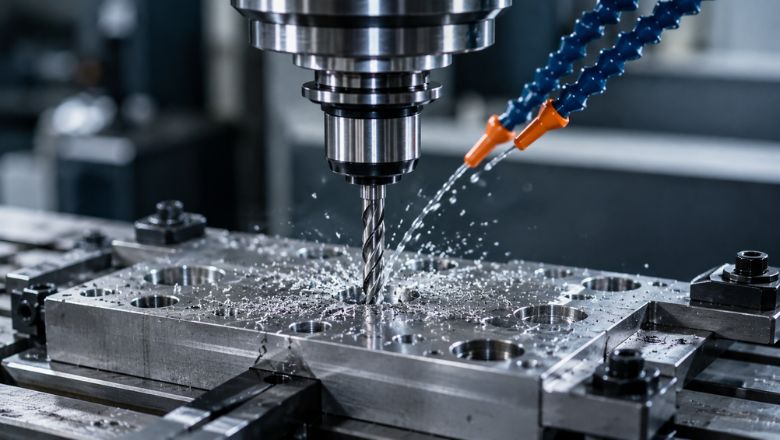
Complete Guide to Drilling Tools Used in CNC Machines
Modern manufacturing depends on precision, speed, and consistency, and CNC drilling tools play a vital role in achieving these goals. Whether you’re producing automotive parts, aerospace components, medical devices, or industrial machinery, selecting the right drilling tool directly impacts hole accuracy, tool life, production efficiency, and machining costs.
At Jay Tech Tools, we understand that manufacturers require reliable drilling solutions that deliver high performance under demanding machining conditions. This guide explains the most commonly used drilling tools in CNC machines, their applications, and how to choose the best tool for your production requirements.
What Are CNC Drilling Tools?
CNC drilling tools are specialized cutting tools designed to create precise holes in a workpiece using Computer Numerical Control (CNC) machines. Unlike conventional drilling, CNC drilling offers exceptional repeatability, tight dimensional tolerances, and superior surface finish.
These tools are manufactured using advanced materials such as High-Speed Steel (HSS), Solid Carbide, and Carbide-Tipped construction to withstand high cutting speeds and continuous industrial production.
The right drilling tool not only improves machining accuracy but also reduces downtime, minimizes tool replacement costs, and enhances overall productivity. For general-purpose machining applications, HSS drill bits remain one of the most reliable and cost-effective choices for manufacturers seeking durability and consistent drilling performance.
Common Types of Drilling Tools Used in CNC Machines :
1. Twist Drill :
Twist drills are the most widely used drilling tools in CNC machining. Their spiral flute design efficiently removes chips while maintaining cutting stability.
They are suitable for:
- General-purpose drilling
- Steel and stainless steel
- Aluminum
- Cast iron
- Plastic components
Twist drills are available in HSS, cobalt, and solid carbide versions depending on the machining application.
2. Solid Carbide Drill :
Solid carbide drills are designed for high-speed CNC machining where precision and long tool life are essential.
Key advantages include:
- Excellent wear resistance
- Higher cutting speeds
- Superior hole accuracy
- Better heat resistance
- Longer service life
They are commonly used in automotive, aerospace, and precision engineering industries.
3. Indexable Insert Drill :
Indexable drills use replaceable carbide inserts instead of a solid cutting edge.
Benefits include:
- Lower tooling cost
- Quick insert replacement
- High metal removal rates
- Suitable for large-diameter holes
These drills are ideal for high-volume CNC production where minimizing machine downtime is critical. The cutting performance of indexable drills largely depends on using high-quality drilling inserts that provide superior wear resistance, accurate hole dimensions, and extended tool life.
4. Spot Drill :
Before deep-hole drilling begins, a spot drill creates an accurate starting point for the drill bit.
Advantages include:
- Prevents drill wandering
- Improves positional accuracy
- Increases hole precision
- Extends drill life
Spot drilling is especially important for precision machining applications.
5. Center Drill :
Center drills are primarily used to create accurate center holes before drilling or turning operations.
They provide:
- Improved alignment
- Better concentricity
- Stable drilling operations
- Reduced vibration
6. Deep Hole Drill :
Deep hole drills are specially engineered for applications where the drilling depth exceeds several times the drill diameter.
These tools feature:
- Efficient chip evacuation
- Enhanced coolant delivery
- High straightness accuracy
- Reduced tool deflection
Industries such as aerospace, hydraulic equipment, and mold manufacturing frequently use deep-hole drilling tools.
How to Choose the Right CNC Drilling Tool :
Selecting the correct drilling tool depends on several machining factors. Understanding machining parameters and cutting tool selection based on engineering principles can significantly improve CNC drilling performance.
Material Being Machined :
Different materials require different cutting geometries and coatings.
For example:
- Mild Steel
- Stainless Steel
- Tool Steel
- Aluminum
- Brass
- Titanium
- Cast Iron
Each material generates different cutting forces and heat, making tool selection extremely important.
Hole Diameter and Depth :
Small-diameter holes require highly rigid tools, while deep-hole applications demand specialized flute designs and coolant channels.
Cutting Speed :
Higher spindle speeds require tools with better heat resistance, such as solid carbide drills with advanced coatings.
Coolant System :
Proper coolant delivery significantly improves chip evacuation and tool life, especially in deep drilling applications.
Benefits of Using High-Quality CNC Drilling Tools :
Investing in premium drilling tools offers long-term manufacturing advantages.
Some major benefits include:
- Higher machining accuracy
- Better surface finish
- Faster production cycles
- Reduced tool wear
- Lower machining costs
- Improved dimensional consistency
- Less machine downtime
- Increased productivity
Quality tools also reduce the chances of workpiece rejection, saving both time and material costs. Investing in modern machining technologies also supports manufacturing efficiency and quality improvement initiatives promoted across India’s industrial sector.
Best Practices for CNC Drilling :
To maximize drilling performance:
- Select the correct drill geometry for the material.
- Use recommended cutting speeds and feed rates.
- Ensure proper coolant flow during machining.
- Replace worn tools before excessive wear occurs.
- Inspect hole quality regularly.
- Use rigid tool holders to minimize vibration.
- Optimize CNC programming for efficient chip evacuation.
Following these practices helps maintain consistent machining quality while extending tool life.
Why Choose Jay Tech Tools?
At Jay Tech Tools, we supply precision-engineered drilling solutions designed to meet the evolving needs of modern CNC machining industries. Our focus on product quality, manufacturing precision, and consistent performance helps businesses improve machining efficiency while reducing operational costs.
Whether your application involves general engineering, automotive manufacturing, mold making, aerospace components, or heavy industrial machining, our drilling tools are developed to deliver reliable performance, excellent dimensional accuracy, and long-lasting durability.
By choosing Jay Tech Tools, manufacturers gain access to dependable tooling solutions backed by technical expertise and a commitment to quality. If you’re new to CNC machining, our CNC Tool Selection Guide for Beginners explains how to choose the right cutting tools for better machining accuracy and productivity.
FAQs :
What are the most commonly used drilling tools in CNC machines?
The most commonly used drilling tools in CNC machines include twist drills, solid carbide drills, indexable insert drills, spot drills, center drills, and deep hole drills. Each tool is designed for specific materials, hole depths, and machining requirements to achieve maximum precision and productivity.
Which drilling tool is best for CNC machining?
The best drilling tool depends on the workpiece material and production requirements. Solid carbide drills are ideal for high-speed precision machining, while HSS drills are suitable for general-purpose applications. For high-volume production, indexable insert drills provide excellent cost efficiency and faster tool replacement.
What is the difference between HSS drills and solid carbide drills?
HSS drills are more economical and suitable for moderate-speed machining, whereas solid carbide drills offer superior hardness, longer tool life, higher cutting speeds, and better dimensional accuracy. Solid carbide drills are generally preferred for CNC production environments where precision and productivity are critical.
How do I choose the right drilling tool for a CNC machine?
Choose a drilling tool based on the workpiece material, hole diameter, drilling depth, spindle speed, coolant availability, and required surface finish. Selecting the correct tool improves machining accuracy, extends tool life, and reduces production costs.
Why are solid carbide drills preferred in CNC machining?
Solid carbide drills are preferred because they provide excellent wear resistance, superior heat resistance, higher cutting speeds, improved chip evacuation, and consistent hole quality. These advantages make them ideal for continuous industrial manufacturing.
How can I increase the life of CNC drilling tools?
To maximize drill life:
- Use the recommended cutting speed and feed rate.
- Apply sufficient coolant during machining.
- Select the correct drill geometry.
- Replace worn tools before excessive wear occurs.
- Ensure proper chip evacuation and rigid tool holding.
Following these practices reduces tool wear and improves machining performance.
Which materials can be drilled using CNC drilling tools?
CNC drilling tools can machine a wide range of materials, including mild steel, stainless steel, cast iron, aluminum, brass, copper, titanium alloys, plastics, and engineering composites. The ideal drill type depends on the material’s hardness and machining characteristics.
What are the advantages of using premium CNC drilling tools?
High-quality CNC drilling tools offer:
- Higher hole accuracy
- Better surface finish
- Longer tool life
- Faster machining cycles
- Lower tooling costs
- Reduced downtime
- Improved production efficiency
- Consistent machining performance
These benefits help manufacturers achieve higher productivity and lower operational costs.
Which industries use CNC drilling tools?
CNC drilling tools are widely used in automotive, aerospace, medical equipment, mold & die manufacturing, precision engineering, heavy engineering, electronics, and industrial machinery manufacturing because these industries require high accuracy and repeatable machining.
Why choose Jay Tech Tools for CNC drilling solutions?
Jay Tech Tools provides precision-engineered CNC drilling tools designed for accuracy, durability, and consistent industrial performance. Our tooling solutions help manufacturers improve machining efficiency, reduce downtime, achieve longer tool life, and maintain reliable production quality across a wide range of CNC machining applications.