
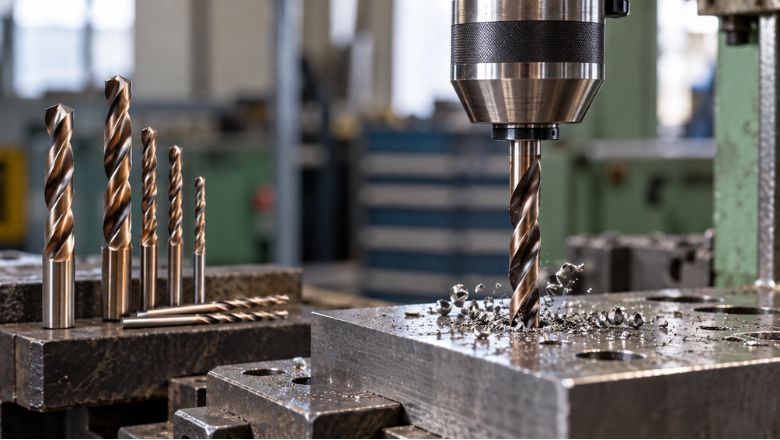
HSS Drill Bit: Sizes, Materials, Specifications & Industrial Applications
When a workshop needs a clean, accurate hole in metal, the drill bit itself can make a bigger difference than many people expect. A suitable HSS Drill Bit delivers consistent cutting performance, handles heat generated during drilling, and can be used across a wide range of engineering and fabrication jobs.
But “HSS drill bit” is not one single specification. Diameter, flute design, shank type, point geometry, material being drilled, cutting speed and machine condition all influence the final result. For manufacturers, fabricators and workshops looking for application-specific tooling, HSS Drill Bits are available in different sizes and specifications to suit varied metal drilling requirements.
For manufacturers, fabricators, maintenance teams and CNC/VMC users, understanding these differences is important before selecting a drill.
What Is an HSS Drill Bit?
HSS stands for High Speed Steel, a tool-steel family developed to retain hardness at elevated cutting temperatures. HSS drill bits are commonly used for drilling metals such as mild steel, alloy steel, aluminium, brass and other engineering materials, with the appropriate grade and cutting conditions.
Standard HSS drill bits are available in a wide range of metric and imperial diameters. Industrial ranges may also include different lengths, shank configurations, point geometries and surface finishes.
For general-purpose metal drilling, the familiar twist drill remains one of the most widely used HSS configurations.
Which Materials Can HSS Drill Bits Handle?
Material selection should come before machine speed.
For mild steel, a standard HSS drill is often an effective choice for general-purpose drilling. Aluminium and brass can also be drilled successfully, although the cutting conditions and geometry may need adjustment.
For harder alloys, stainless steel and heat-resistant materials, simply using a standard drill at higher speed can create excessive heat and accelerate edge wear. A suitable HSS grade, point geometry, cutting speed and coolant strategy become much more important.
This is one reason industrial users should specify the workpiece material and drilling conditions when sourcing HSS drill bits instead of ordering only by diameter.
HSS Drill Bit Specifications That Buyers Should Check :
Two drill bits with the same diameter can behave quite differently.
Before purchasing, check specifications such as:
Diameter: Determines the nominal hole size.
Overall length and flute length: Important when drilling deep holes or accessing recessed components.
Shank type: Straight-shank drills are common for general-purpose machines, while other shank configurations suit specific machine setups.
Point angle: The correct geometry can improve centring, penetration and cutting behaviour for the intended material.
Surface finish or coating: Depending on the product, treatments can influence friction, wear and cutting performance.
HSS grade: Different HSS grades are designed for different levels of performance and operating conditions.
Industrial HSS ranges commonly follow recognised dimensional or product standards, depending on the drill design and manufacturer.
If you want a broader comparison of drill configurations, materials, sizes and surface treatments, our detailed guide on HSS Drill Bits: Types, Sizes, Materials, Coatings and Industrial Applications provides additional technical context.
For buyers working with standardised engineering tooling, checking applicable Indian standards through the Bureau of Indian Standards (BIS) can provide useful reference when evaluating product specifications.
Why Drill Life Is Not Only About the Bit :
A good HSS drill bit can still produce poor results if the drilling setup is wrong.
Excessive RPM, insufficient lubrication, excessive feed pressure, poor workholding or a worn machine spindle can increase heat and cutting forces. The result may be premature edge wear, poor hole finish, oversize holes or even drill breakage.
For production environments, operators should match speed and feed to the drill diameter and workpiece material, while using coolant or cutting fluid where appropriate.
This is particularly important for smaller diameters. A tiny drill has much less tolerance for poor operating conditions than a larger one.
HSS Drill Bits for Workshops, Fabrication & Machine Shops :
HSS drill bits continue to be used across fabrication workshops, maintenance departments, engineering units, automotive work, general machining and industrial production.
For a workshop, having the right range of sizes can be more useful than keeping a large quantity of one standard diameter. A properly selected HSS drill assortment allows operators to handle different hole requirements without repeatedly changing tooling specifications.
For bulk requirements, buyers should also consider consistency between batches. Diameter accuracy, geometry, material quality and manufacturing control can directly affect repeatability in production. For machining operations that involve more than hole-making, manufacturers can also consider Drilling Inserts for CNC and VMC machining, particularly where interchangeable cutting tools are required.
Choosing the Right HSS Drill Bit Supplier :
When purchasing HSS drill bits for industrial use, price should not be the only deciding factor. Ask about the available sizes, HSS grade, dimensional consistency, application suitability and supply capability.
Jay Tech Tools serves industrial tooling requirements with a focus on HSS Drill Bits and machining applications. For manufacturers, fabricators and workshops in Gujarat and across India, working with an experienced tooling supplier can make it easier to match the drill specification with the actual job rather than selecting a bit purely by diameter.
Final Takeaway :
The right HSS Drill Bit is a combination of material, geometry, size and operating conditions. A 6 mm drill for mild steel, for example, should not automatically be treated as the same solution for stainless steel or a harder alloy.
If your requirement involves specific diameters, materials, machine types or bulk quantities, selecting the correct specification first can improve drilling consistency and reduce unnecessary tool replacement.
Jay Tech Tools can help businesses identify suitable HSS Drill Bit options for their industrial drilling requirements.
Need the Right HSS Drill Bit?
Get reliable HSS Drill Bits in the sizes and specifications your application demands. Contact Jay Tech Tools for industrial drilling requirements, bulk orders, and expert product assistance.
Choose the right drill. Drill with confidence.
FAQs :
What is an HSS Drill Bit used for?
An HSS Drill Bit is primarily used for drilling holes in metal and other engineering materials. Depending on its grade and geometry, it can be used for materials such as mild steel, aluminium, brass, alloy steel and selected stainless-steel applications. The correct drill specification should always be matched to the workpiece material and machining conditions.
Which HSS Drill Bit size should I use for metal drilling?
The required HSS Drill Bit size depends on the final hole diameter, fastener size, tapping requirement or engineering drawing. Common metric sizes range from small pilot drills to larger industrial diameters. For accurate production work, selecting the exact required diameter is preferable to choosing the nearest available size.
Can HSS Drill Bits be used for stainless steel?
Yes, suitable HSS Drill Bits can be used for stainless steel, but drill selection and operating conditions are important. Stainless steel can generate considerable heat and work-harden when drilled incorrectly. Using an appropriate drill geometry, controlled feed, suitable cutting speed and adequate lubrication can help improve tool life and hole quality.
How do I choose an HSS Drill Bit for industrial applications?
Start with the workpiece material, required hole diameter and hole depth. Then consider the drill’s HSS grade, point geometry, flute length, overall length, shank configuration and surface treatment. For production applications, machine rigidity, spindle condition, coolant availability and the required hole tolerance should also be considered.
What is the difference between HSS and regular steel drill bits?
HSS Drill Bits are manufactured from High Speed Steel, which is designed to retain useful hardness at elevated cutting temperatures. This makes HSS suitable for many metal-drilling applications where ordinary carbon-steel tooling may lose its cutting performance more quickly.
How can I improve the life of an HSS Drill Bit?
Use the correct cutting speed and feed for the drill diameter and workpiece material. Keep the workpiece firmly secured, avoid excessive pressure, use suitable cutting fluid where required and replace or resharpen drills when the cutting edges become worn. Poor machine alignment or excessive spindle runout can also shorten drill life.
Are HSS Drill Bits suitable for CNC and VMC machines?
Yes. Suitable HSS Drill Bits can be used on CNC and VMC machines when their geometry, dimensions and operating parameters match the application. However, high-volume CNC production may require specialised drill geometries or coated tooling depending on the material, tolerance, hole depth and production cycle.
What specifications should I check before buying HSS Drill Bits?
Important specifications include diameter, HSS grade, point angle, flute length, overall length, shank type and surface finish or coating where applicable. Industrial buyers should also confirm dimensional consistency, application suitability and availability of the required sizes rather than evaluating the drill only on price.
How do I know if an HSS Drill Bit is suitable for my application?
The best way is to match the drill specification with the actual machining requirement. Consider the workpiece material, hole diameter, hole depth, machine type, spindle speed, feed rate and required hole quality. For bulk or production requirements, discussing the application with an experienced tooling supplier can help avoid selecting an unsuitable specification.
Where can I buy HSS Drill Bits for industrial drilling requirements in India?
Industrial buyers should choose a supplier that can provide the required HSS Drill Bit sizes and specifications consistently and can understand the application rather than supplying only a standard size. Jay Tech Tools provides HSS Drill Bit solutions for industrial and machining requirements, including requirements where size, application and tooling consistency are important.