
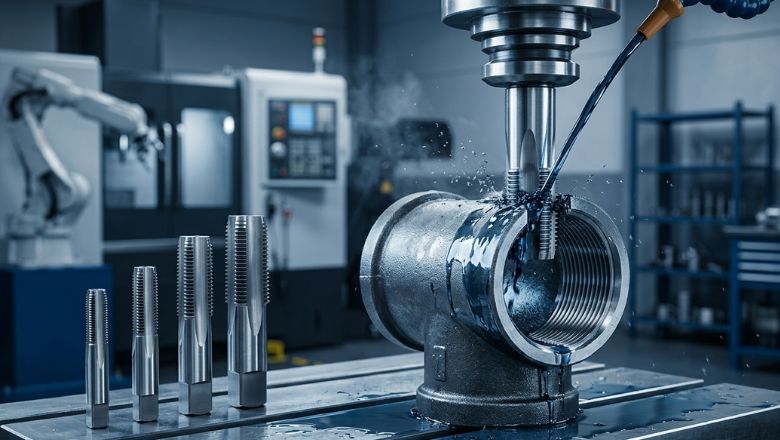
Pipe Taps: Precision Threading Solutions for Industrial Applications
In industries where threaded pipe connections are critical, choosing the right threading tool directly impacts accuracy, durability, and production efficiency. Pipe taps are specially designed cutting tools used to create internal threads in pipes, fittings, and threaded holes for fluid, gas, hydraulic, and industrial systems. From plumbing and automotive industries to heavy engineering and manufacturing plants, pipe tap play a major role in ensuring leak-proof and reliable connections. High-quality Industrial Threading Solutions help manufacturers achieve accurate and durable pipe threading operations.
At Jay Tech Tools, precision and durability are at the core of every threading solution. High-quality pipe tap help manufacturers achieve accurate thread profiles, reduced tool wear, and smoother machining operations, especially in demanding industrial environments.
Why Pipe Taps Are Important in Industrial Threading :
Unlike standard taps, pipe taps are engineered specifically for tapered or straight pipe threads. Their design allows secure and tight-fitting threaded joints, which are essential in applications involving liquids, gases, and pressure systems.
Industries prefer precision pipe tap because they offer:
- Accurate thread formation
- Improved sealing capability
- Longer operational life
- Reduced thread damage
- Consistent machining performance
- Better productivity in high-volume manufacturing
Modern manufacturing environments require tools that can maintain thread accuracy even under continuous operation. This is why industries increasingly invest in premium-grade pipe tap manufactured with advanced materials and precision engineering. Proper thread standards play an important role in ensuring safe and reliable industrial pipe connections.
Types of Pipe Taps Used in Manufacturing Industries :
Different industrial applications require different thread standards and tap designs. Many manufacturers also use Precision tapping tools for fastener and internal thread cutting applications. Selecting the right type of pipe tap improves machining efficiency and ensures compatibility with pipe fittings.
1. NPT Pipe Tap :
NPT (National Pipe Taper) taps are widely used for tapered pipe threads. These taps create threads that seal tightly when connected, making them ideal for hydraulic systems, gas pipelines, and fluid transfer applications.
Their tapered design allows improved sealing without requiring additional components in many industrial setups.
2. BSP Pipe Tap :
BSP (British Standard Pipe) taps are commonly used in European and Asian industries. They are suitable for plumbing, industrial pipelines, and machinery manufacturing where BSP thread standards are required.
Manufacturers choose BSP taps for their consistent threading accuracy and compatibility with international piping systems.
3. Straight Pipe Tap :
Straight pipe tap produce parallel threads instead of tapered threads. These are typically used in applications where sealing is achieved using washers, O-rings, or gaskets.
Industries using instrumentation systems and precision fittings often rely on straight pipe taps for stable connections.
4. Spiral Flute Pipe Tap :
Spiral flute taps are designed for blind hole threading operations. Their flute geometry helps remove chips efficiently, reducing thread damage and improving surface finish.
These taps are highly effective for CNC machining and automated production environments.
5. Spiral Point Pipe Tap :
Spiral point taps push chips forward during threading operations, making them ideal for through-hole applications. They help maintain smooth cutting performance and reduce production downtime.
Key Features of High-Quality Pipe Taps :
The performance of a pipe tap depends on several important factors. Premium industrial pipe taps are manufactured to deliver consistent threading quality and extended tool life.
Superior Material Quality :
Pipe taps manufactured from high-speed steel (HSS) or cobalt materials provide enhanced wear resistance and durability. These materials withstand high temperatures and continuous machining operations.
Precision Thread Geometry :
Accurate thread geometry ensures smooth engagement with pipe fittings and reduces the risk of leakage or thread failure.
Advanced Surface Coating :
Modern coatings such as TiN or TiCN improve hardness, reduce friction, and increase resistance to wear and corrosion.
Efficient Chip Evacuation :
Proper flute design helps remove chips effectively during machining, improving threading consistency and reducing tool breakage.
Longer Tool Life :
Industrial-grade pipe tap are designed to maintain cutting efficiency even in high-production environments, helping manufacturers reduce tooling costs.
How Precision Pipe Tap Improve Manufacturing Efficiency :
In competitive manufacturing environments, production efficiency matters as much as product quality. Using premium pipe tap helps industries reduce downtime, improve thread consistency, and achieve higher productivity.
Benefits include:
- Faster threading operations
- Reduced rejection rates
- Lower maintenance costs
- Improved thread finish
- Better compatibility with automated machining systems
- Enhanced production accuracy
Manufacturers that use precision-engineered pipe tap often experience better operational reliability and improved final product quality.
Choosing the Right Pipe Tap for Your Application :
Selecting the correct pipe tap depends on several factors, including material type, thread standard, hole type, and machining environment.
Consider the Thread Standard :
Always select the correct thread type such as NPT, BSP, or straight pipe threads based on your application requirements.
Evaluate Workpiece Material :
Different materials require different tap geometries and coatings. Stainless steel, cast iron, aluminum, and alloy steel may need specialized tap designs.
Blind Hole vs Through Hole :
Blind hole applications usually require spiral flute taps, while through holes often perform better with spiral point taps.
Machine Compatibility :
Ensure the pipe tap is compatible with manual operations, CNC machines, or automated threading systems.
Tool Coating Requirements :
For high-speed or high-volume operations, coated taps provide improved wear resistance and longer operational life.
Why Industries Prefer Jay Tech Tools for Pipe Taps :
Industrial buyers prefer reliable tooling partners that deliver consistent quality and precision. Jay Tech Tools focuses on manufacturing durable and high-performance threading tools suitable for modern industrial applications.
The company emphasizes:
- Precision manufacturing standards
- Consistent threading accuracy
- Industrial-grade materials
- Reliable performance
- Wide application compatibility
- Long-lasting tooling solutions
With increasing demand for precision machining and industrial automation, high-quality pipe tap have become essential tools for manufacturers aiming to improve productivity and operational efficiency.
Future Demand for Precision Pipe Taps :
As industries continue adopting automation and advanced manufacturing technologies, the demand for precision threading tools is expected to grow significantly. Sectors such as oil and gas, automotive, aerospace, and industrial manufacturing increasingly require high-performance threading solutions that ensure reliability and efficiency.
Advanced pipe tap designed for CNC machining, high-speed operations, and difficult materials will continue playing a major role in modern manufacturing systems.
Pipe taps are critical tools for creating accurate and durable threaded pipe connections across multiple industries. From hydraulic systems and industrial machinery to plumbing and automotive manufacturing, precision pipe tap improve operational reliability, productivity, and thread quality.
Choosing high-quality pipe tap helps manufacturers reduce downtime, improve efficiency, and achieve consistent machining performance. With precision-engineered threading solutions from Jay Tech Tools, industries can ensure dependable threading operations and long-term manufacturing success.
Looking for High-Performance Pipe Taps for Industrial Applications?
At Jay Tech Tools, we manufacture precision-engineered Pipe Taps designed for accurate threading, longer tool life, and reliable industrial performance. Whether you need NPT Pipe Tap, BSP Pipe Tap, or customized threading solutions, our tools are built to deliver consistent results in demanding machining environments.
✔ High Precision Threading
✔ Durable Industrial-Grade Materials
✔ Smooth Cutting Performance
✔ Suitable for CNC & Manual Operations
✔ Reliable Solutions for Multiple Industries
Boost your production efficiency with premium-quality industrial threading tools trusted by manufacturers across industries.
Get expert assistance in selecting the right Pipe Tap for your industrial application. Contact our team today to get the right threading solution for your industrial application requirements.
Explore Our Industrial Threading Solutions Now
Request a Quote for Precision Pipe Taps Today
FAQs :
What are Pipe Taps used for in industrial applications?
Pipe Taps are used to create internal threads inside pipes, fittings, and threaded holes for secure industrial connections. These tools help manufacturers achieve accurate and leak-proof threading in plumbing, hydraulic systems, and machinery. High-quality Pipe Taps improve thread consistency, reduce machining errors, and increase production efficiency. Many industries also use precision threading tools for automotive, oil and gas, and CNC machining applications.
How do Pipe Taps improve threading accuracy in manufacturing?
Pipe Taps improve threading accuracy by cutting precise and uniform internal threads during machining operations. Their engineered flute design and cutting geometry help reduce thread damage, vibration, and alignment issues. Precision Pipe Taps also ensure smooth chip evacuation, which improves surface finish and tool performance. Manufacturers often use industrial threading tools to maintain reliable pipe fitting connections and consistent production quality.
What is the difference between NPT Pipe Taps and BSP Pipe Taps?
NPT Pipe Taps create tapered threads commonly used in American piping systems, while BSP Pipe Taps are designed for British standard pipe threading applications. Both Pipe Taps help produce secure threaded connections, but their thread angles and dimensions differ. Choosing the correct industrial tap depends on the piping standard required for your machinery, hydraulic systems, or industrial equipment to ensure compatibility and leak resistance.
Which materials are commonly used to manufacture Pipe Taps?
Pipe Taps are commonly manufactured using high-speed steel (HSS), cobalt steel, and carbide materials for better durability and cutting performance. These materials provide heat resistance, wear protection, and longer tool life during heavy machining operations. Industrial cutting tools made from premium materials are especially useful for threading stainless steel, cast iron, and alloy metals in high-production manufacturing environments.
How do I choose the right Pipe Tap for my application?
Choosing the right Pipe Tap depends on the thread standard, workpiece material, hole type, and machining method. Spiral flute taps work well for blind holes, while spiral point taps are better for through holes. Manufacturers also consider coating type, machine compatibility, and cutting speed when selecting industrial threading solutions to achieve better accuracy, smoother threads, and longer operational life.
Are Pipe Taps suitable for CNC machining operations?
Yes, Pipe Taps are widely used in CNC machining operations because they provide precise threading and consistent performance. CNC-compatible Pipe Taps are designed for high-speed cutting, smooth chip removal, and accurate thread formation in automated production systems. Many manufacturers prefer precision machining tools with advanced coatings to reduce tool wear, improve productivity, and maintain thread quality during continuous industrial operations.
Why are high-quality Pipe Tap important for leak-proof connections?
High-quality Pipe Tap are important because they create accurate thread profiles that help prevent leakage in piping systems. Properly threaded connections improve sealing performance in hydraulic, pneumatic, and fluid transfer applications. Precision threading tools also reduce thread defects and misalignment issues, ensuring stronger and safer pipe joints in industrial systems where pressure resistance and durability are critical.
What industries commonly use Pipe Taps?
Pipe Taps are commonly used in industries such as oil and gas, automotive manufacturing, plumbing, aerospace, and industrial machinery production. These threading tools help create secure threaded connections in pipes, valves, fittings, and pressure systems. Many manufacturers rely on industrial tapping solutions to improve production efficiency, maintain threading accuracy, and ensure reliable performance in demanding operating conditions.
How can Pipe Taps increase manufacturing productivity?
Pipe Taps increase manufacturing productivity by reducing machining errors, improving thread consistency, and minimizing downtime caused by tool failure. Their efficient cutting geometry allows faster threading operations with smoother finishes and better chip control. Precision industrial tools also help manufacturers lower rejection rates, improve operational efficiency, and achieve consistent production quality in automated and CNC machining environments.
What are the benefits of using coated Pipe Taps?
Coated Pipe Taps offer better wear resistance, reduced friction, and improved heat protection during machining operations. Advanced coatings such as TiN and TiCN help extend tool life and maintain cutting performance in high-speed industrial applications. Manufacturers often use coated threading tools when working with hard metals and stainless steel because they improve productivity, reduce maintenance costs, and enhance threading precision.