How to Choose a Threading Taps Supplier in Gujarat for CNC, VMC & Industrial Applications
Finding a threading tap supplier in Gujarat is easy. Finding one that consistently provides the right tap for your material, machine, thread specification, and production requirement is a different matter.
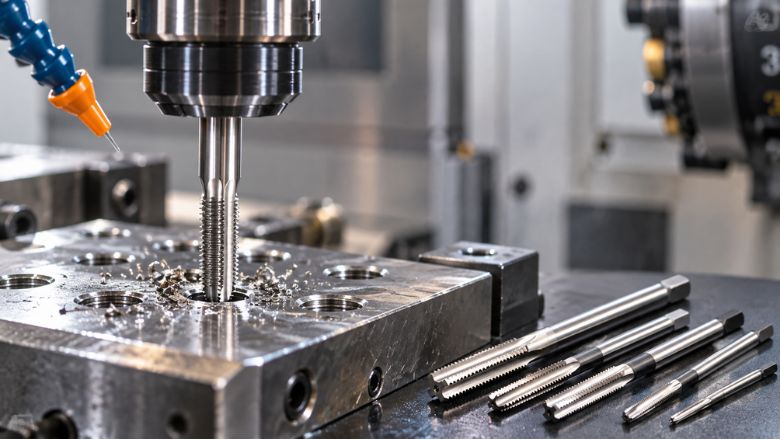
For CNC, VMC, and conventional machining operations, the Threading Taps is a small cutting tool with a surprisingly large effect on the finished component. A wrong tap selection can lead to poor thread quality, excessive tool wear, broken taps, rejected components, or unnecessary production downtime.
That is why manufacturers should look beyond price when choosing a threading tap supplier.
Start With the Threading Application, Not Just the Tap Size :
A common purchasing mistake is to ask for a tap simply by size—for example, M8, M10, M12, or another specification—without discussing where and how it will be used.
The actual application matters.
The supplier should understand whether the tap will be used for CNC machining, VMC operations, general workshop work, maintenance jobs, or high-volume production. Material also plays a major role. Aluminium, mild steel, alloy steel, stainless steel, cast iron, and other engineering materials do not behave the same way during tapping.
A supplier with application knowledge can help identify the appropriate tap geometry and specification instead of treating every job as a standard requirement.
Why Material Compatibility Matters :
Threading is not simply about cutting a hole. The tap has to form or cut the required thread accurately while handling cutting forces, heat, and chip evacuation.
For example, stainless steel can be challenging because of its toughness and tendency to work-harden. Aluminium may require a different cutting approach, while harder engineering materials demand suitable tool geometry and cutting conditions.
This is where an experienced Threading Taps Supplier in Gujarat can add practical value. The right supplier should be able to discuss the relationship between workpiece material, tap specification, cutting conditions, and expected tool performance.
That conversation is often more valuable than choosing the cheapest tool on a quotation.
Check the Tap Specification Before Comparing Prices :
Two taps with the same nominal size are not necessarily equivalent in actual machining performance.
Before purchasing, manufacturers should verify important details such as thread standard, pitch, tap type, material, geometry, tolerance class, and application suitability. Depending on the job, the requirement may be for a particular metric, BSP, NPT, UNC, UNF, or other thread specification.
For production environments, consistency matters just as much as availability. A supplier should be able to provide tools that match the required specification repeatedly, not just once.
This becomes particularly important when several machines are producing the same component. For Indian standards and standard-related information, manufacturers can also refer to the Bureau of Indian Standards (BIS) resources when checking applicable specifications.
CNC and VMC Machining Require Consistency :
In CNC and VMC production, tooling decisions directly influence repeatability. A threading tap that performs well for a few components but deteriorates rapidly can create hidden costs through tool changes, machine stoppages, inspection failures, and scrap. Threading is only one part of CNC/VMC tooling; manufacturers may also need reliable Drilling Inserts for consistent hole-making and machining operations.
When evaluating a supplier, ask practical questions:
Can the required sizes be supplied consistently? Is the tool suitable for the intended machine operation? Can the supplier understand the workpiece material and thread requirement? Is technical assistance available when a tapping problem occurs?
These questions reveal much more about a supplier than a catalogue alone.
Look at Tool Performance, Not Only Purchase Price :
The lowest quotation is not always the lowest-cost solution.
Suppose one tap costs slightly less but produces inconsistent threads or has a short working life. Frequent replacement and rejected components can quickly outweigh the initial saving.
A better comparison considers cost per component, tool life, thread quality, production stability, and availability.
For manufacturers in Gujarat, working with a supplier that understands industrial tooling requirements can also reduce the time spent searching for suitable replacements when a particular tap is required urgently.
Why Local Supplier Support Can Matter :
Gujarat has a strong industrial base, with engineering, automobile, machinery, fabrication, chemical, pharmaceutical, and manufacturing businesses operating across cities such as Ahmedabad, Rajkot, Vadodara, Surat, and other industrial regions.
For these businesses, responsive tooling supply can be important. Production schedules do not always wait for a tool to arrive.
A local supplier can therefore be valuable not simply because of geographical proximity, but because it can provide faster communication, product availability, and application-oriented support when required.
Choose a Supplier That Understands Industrial Tooling :
A reliable threading tap supplier should be more than a seller of cutting tools. Technical understanding, product consistency, transparent communication, and dependable supply all contribute to a better purchasing decision.
Jay Tech Tools serves industrial customers looking for threading taps and other CNC/VMC tooling requirements. With an application-focused approach, the company helps manufacturers identify tooling options according to their machining requirements rather than treating every requirement as identical.
If you are comparing a Threading Taps Supplier in Gujarat, discuss your thread specification, workpiece material, machine type, and production requirement before placing the order. Those four details can make the supplier-selection process much more precise—and can help you avoid costly tooling mistakes.
If you are evaluating supplier support for CNC and VMC tapping applications, this resource on reliable CNC & VMC tapping solutions provides additional practical information.
Need the Right Threading Taps for Your Application?
Looking for a reliable Threading tap supplier in Gujarat? Connect with Jay Tech Tools for the right threading tap based on your thread specification, material, and CNC/VMC application.
Get in touch with Jay Tech Tools today and discuss your tooling requirement.
FAQs :
How do I choose a reliable Threading Taps Supplier in Gujarat?
Choose a supplier that can understand your thread specification, workpiece material, machine type, and production requirements rather than supplying a tap based only on size. Consistent product quality, technical understanding, availability, and responsive support are important factors when selecting an industrial tooling supplier.
What information should I share with a threading tap supplier before placing an order?
Provide the thread size and pitch, thread standard, workpiece material, required thread tolerance, machine type, and whether the operation is manual, CNC, or VMC. For production applications, sharing details about the machining volume and existing tooling performance can also help the supplier recommend a more suitable option.
How does workpiece material affect threading tap selection?
Material has a direct influence on tapping performance. Stainless steel, alloy steel, aluminium, cast iron, and mild steel have different cutting characteristics, so the tap geometry and specification may need to change accordingly. Selecting a tap according to the actual material can help maintain thread quality and reduce premature tool failure.
Why do threading taps break during CNC or VMC machining?
Tap breakage can result from several factors, including an incorrect tap specification, unsuitable tapping parameters, incorrect pre-drilled hole size, poor alignment, inadequate lubrication, chip evacuation problems, or excessive cutting load. The correct solution depends on identifying the actual cause rather than simply replacing the broken tap.
Is the cheapest threading tap always the most economical option?
No. Purchase price alone does not represent the actual tooling cost. A slightly higher-priced tap may provide better tool life, consistent thread quality, fewer tool changes, and lower rejection rates. For production machining, comparing cost per component and overall tool performance gives a more meaningful picture of value.
Can the same threading tap be used for different materials?
Not necessarily. A tap suitable for one material may not provide the same performance in another because hardness, toughness, ductility, chip formation, and work-hardening behaviour can vary significantly. The tap should therefore be selected according to the material and machining application.
What should manufacturers check before buying threading taps for CNC or VMC machines?
Manufacturers should verify the thread standard, size, pitch, tolerance, tap type, material, and application suitability. Machine compatibility and tapping conditions should also be considered. For repeated production, consistency between batches is particularly important because tooling variation can affect thread quality and process stability.
How can a threading tap supplier help improve production reliability?
An experienced supplier can do more than provide the required size. By understanding the workpiece material, thread specification, machine, and production conditions, the supplier can help identify a suitable tooling option and troubleshoot common issues such as premature wear, poor thread finish, or tap breakage.
Which industries commonly require industrial threading taps in Gujarat?
Threading taps are widely used in engineering, automotive components, machinery manufacturing, fabrication, industrial equipment, and general metalworking. Gujarat’s manufacturing base creates demand for reliable tapping tools across both job-work and high-volume production environments.
Why should I consider Jay Tech Tools for threading taps in Gujarat?
Jay Tech Tools focuses on industrial tooling requirements for CNC, VMC, and machining applications. Instead of treating every threading requirement as identical, the selection can be considered around factors such as thread specification, workpiece material, machine application, and production needs. This application-focused approach helps manufacturers make a more informed tooling decision.