
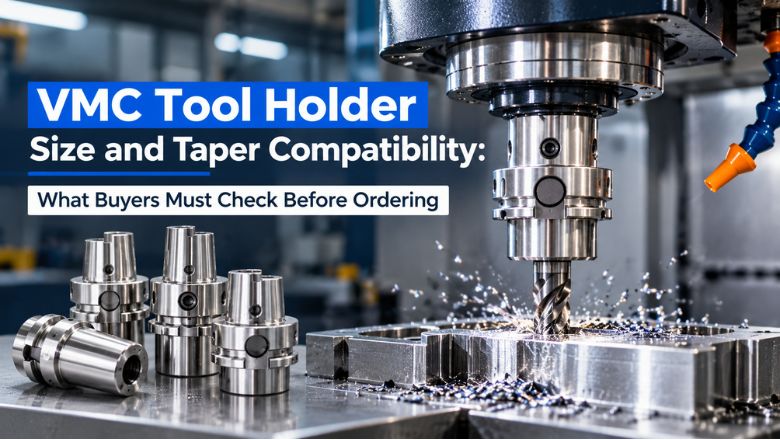
VMC Tool Holder Size and Taper Compatibility: What Buyers Must Check Before Ordering
Choosing a VMC tool holder is not simply a matter of finding a holder that fits the cutting tool. In CNC and VMC machining, the holder must also match the machine spindle, tool shank, clamping arrangement, and machining requirements. A small mismatch can affect tool positioning, surface finish, dimensional accuracy, and machining consistency.
For manufacturing units working with aluminium, steel, cast iron, or other engineering materials, these details matter every day. Selecting the correct VMC Tool Holder helps establish a reliable connection between the machine spindle and the cutting tool, allowing the machining process to perform as intended. For detailed product information and available tooling options, explore our VMC Tool Holder solutions for CNC and VMC machining applications.
Jay Tech Tools understands the importance of selecting machining accessories according to actual shop-floor requirements. Before placing an order, buyers should pay attention to the following technical details rather than choosing a holder based on price or appearance alone.
1. Check the Spindle Taper Before Selecting a VMC Tool Holder :
The spindle taper is one of the first specifications to verify. VMC machines are designed for particular tool-holder interfaces, and these are not automatically interchangeable.
Common interfaces include BT, CAT, and HSK, although availability depends on the machine design and application. BT holders are widely used in many vertical machining centres, while CAT interfaces are common in other CNC machine configurations. HSK systems are often associated with applications requiring a different interface design and high-speed performance.
A holder with the wrong taper cannot provide the intended seating and clamping arrangement. Even if it appears close to the required size, that does not make it compatible.
Before purchasing, check the machine manual or spindle specification plate. Confirm the exact taper type and interface designation. If the machine uses a BT40 spindle, for example, a BT30 holder is not a suitable substitute simply because both belong to the BT family. For additional technical context on machine-tool interfaces and modular tooling, refer to this resource from the Indian Machine Tool Manufacturers’ Association (IMTMA).
2. Match the Tool Shank Diameter With the Holder :
The next step is to verify the cutting tool’s shank diameter. An end mill, drill, or other cutting tool must fit the holder’s clamping range and design.
Different VMC tool holder types accommodate tools in different ways. ER collet holders use a compatible collet to grip the tool, while side-lock holders use a set screw to secure suitable shank tools. Hydraulic and shrink-fit holders use different clamping principles and have their own application requirements.
Consider a machining operation that requires an end mill with a 10 mm shank. The selected holder and collet arrangement must support that exact shank diameter. Choosing an incompatible collet or relying on an unsuitable clamping range may compromise tool retention and concentricity.
Buyers should also check whether the cutting tool has a straight shank, Weldon flat, or another specified geometry. The holder must be designed for that configuration. For drilling operations, you can also explore our range of HSS Drill Bits to find cutting tools suited to your machining requirements.
3. Consider Gauge Length and Tool Reach :
Tool reach is another important purchasing consideration, particularly when machining deep pockets, narrow cavities, or components with complex profiles.
Gauge length refers to the distance from the spindle gauge line to the tool’s reference point. The required reach depends on the workpiece geometry, fixture arrangement, and depth of the machining operation.
An unnecessarily long VMC tool holder assembly can increase deflection and vibration, especially when cutting forces are high. Excessive overhang may also affect surface finish and dimensional consistency.
However, selecting the shortest possible assembly is not always practical. The cutting tool must reach the machining area without colliding with the workpiece, fixture, or machine components.
The right approach is to determine the required working depth first and then select a holder-and-tool combination that provides sufficient clearance without unnecessary extension.
4. Check Runout and Clamping Requirements :
Runout describes the variation in a rotating tool’s position relative to its intended rotational axis. Excessive runout can cause uneven cutting-edge loading, premature tool wear, and inconsistent machining results.
For precision milling and finishing, buyers should pay close attention to the holder’s stated accuracy, balancing specifications where relevant, and the complete clamping assembly. Actual performance depends on the holder, collet or clamping system, cutting tool, cleanliness, and correct assembly.
Spindle speed also matters. High-speed machining may require holders balanced for the intended operating conditions. Buyers should not assume that every holder is suitable for every rotational speed.
Before installation, clean the spindle contact surfaces and holder taper, inspect the clamping components, and follow the machine manufacturer’s instructions. These simple checks can help prevent avoidable setup problems.
5. Evaluate the Application Before Comparing Prices :
Two VMC tool holders may look similar but serve different machining requirements. A holder used for general milling may not be the preferred option for high-speed finishing or an operation involving significant cutting loads.
Consider the material being machined, cutter diameter, cutting forces, spindle speed, required tolerance, and production volume. These factors help determine whether an ER collet holder, side-lock holder, or another suitable design is appropriate.
Price should be evaluated alongside compatibility, manufacturing quality, documented specifications, and expected service life. The least expensive option may not provide the best overall value if it contributes to frequent tool changes, inconsistent results, or avoidable downtime.
For repeat production, consistency between holders and replacement components is particularly important. Buyers should confirm the specifications before ordering multiple units. For more details on selecting tooling for accurate machining operations, read our related article on VMC Tool Holder for Precision CNC Machining.
6. What Information Should You Share With Your Supplier?
A clear technical enquiry makes it easier to identify a suitable VMC tool holder. Share the machine make and model, spindle taper, cutting-tool shank diameter, required gauge length, machining operation, and operating speed.
If available, include the existing holder’s identification marking or the relevant machine-manual specification. This reduces ambiguity and helps the supplier assess compatibility before recommending a product.
Jay Tech Tools supplies CNC and VMC tooling solutions for industrial machining requirements. Buyers can discuss their application and machine specifications to identify suitable tooling options instead of relying on assumptions.
Choose the Right VMC Tool Holder for Your Machining Setup :
The correct holder begins with accurate specifications. Spindle taper, tool shank, gauge length, clamping method, and operating conditions all influence the suitability of a tool-holder assembly.
If you are sourcing a VMC Tool Holder for a new machine, replacement requirement, or production setup, contact Jay Tech Tools with your technical specifications. A clear understanding of the application helps you shortlist compatible options and make a more informed purchasing decision.
Looking for a Reliable VMC Tool Holder?
Get the right fit for your CNC/VMC machining requirements with Jay Tech Tools. Contact us today to discuss your specifications and find a suitable tooling solution for your application.
FAQs :
What is a VMC Tool Holder used for?
A VMC Tool Holder secures a cutting tool to the spindle of a Vertical Machining Centre. It helps maintain proper tool positioning and supports consistent machining during milling, drilling and other compatible operations.
Which VMC Tool Holder is suitable for a BT40 spindle?
A BT40-compatible tool holder is required for a machine with a BT40 spindle interface. The correct holder design, tool clamping method, gauge length and operating-speed rating should also match the machining application.
What is the difference between BT30 and BT40 tool holders?
BT30 and BT40 tool holders belong to different spindle taper sizes and are not directly interchangeable. The appropriate option depends on the machine’s spindle interface, design specifications and intended machining requirements.
How do I select the correct VMC Tool Holder size?
Check the spindle taper, cutting tool shank diameter, required gauge length and clamping system before ordering. Also consider the workpiece material, cutting forces and spindle speed to ensure the holder suits the intended operation.
What are the common types of VMC Tool Holders?
Common types include ER collet holders, side-lock or end-mill holders, hydraulic holders and shrink-fit holders. Each uses a different clamping method, so selection should depend on the cutting tool, machining operation and required precision.
How does tool holder runout affect machining accuracy?
Excessive runout can cause uneven cutting loads, premature tool wear, poor surface finish and inconsistent dimensions. Correct holder selection, clean contact surfaces, suitable clamping components and proper assembly help control runout.
Can the same VMC Tool Holder be used for milling and drilling?
Some holders can accommodate tools used for different operations, provided the shank, clamping arrangement and operating requirements are compatible. However, a holder suitable for one cutting tool should not automatically be assumed suitable for every milling or drilling application.
What causes vibration in a VMC Tool Holder assembly?
Vibration may result from excessive tool overhang, incorrect clamping, spindle or holder runout, unsuitable cutting parameters, tool wear or workpiece-fixture issues. Inspect the complete setup before replacing the holder.
What should buyers check before ordering a VMC Tool Holder in India?
Buyers should confirm the machine’s spindle taper, required holder type, tool shank size, gauge length and speed requirements. They should also verify product specifications, compatibility information, quality documentation and supplier support before placing an order.
Where can I find a suitable VMC Tool Holder for industrial machining?
You can contact Jay Tech Tools to discuss your CNC/VMC tooling requirements. Share your machine model, spindle taper, cutting tool specifications and machining application to help identify suitable options.