
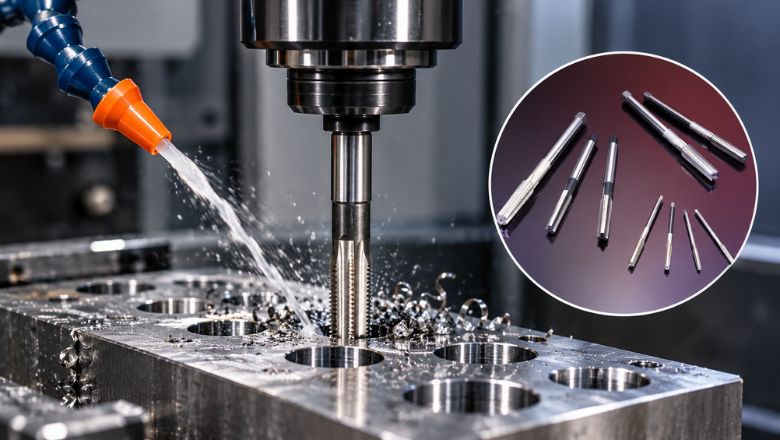
Drilling Inserts for Precision Drilling Applications: Selection, Performance and Industrial Use
In modern machining, drilling is not simply about making a hole. The real challenge is producing that hole accurately, repeatedly, and at the required production speed. This is where the right drilling inserts can make a noticeable difference.
For CNC machining, VMC operations, metal fabrication, and high-volume production, drilling inserts are designed to provide controlled cutting performance while maintaining dimensional consistency. But not every insert is suitable for every material or drilling condition. Insert geometry, carbide grade, coating, cutting parameters, and workpiece material all influence the final result. For manufacturers looking for application-specific tooling, explore our range of Drilling Inserts designed for industrial machining requirements.
For industries sourcing dependable cutting tools in India, Jay Tech Tools provides drilling insert solutions for different machining requirements, helping manufacturers select tooling according to their application rather than relying on a one-size-fits-all approach.
What Are Drilling Inserts?
Drilling inserts are replaceable cutting components used in specific types of industrial drilling tools. Instead of replacing the complete drill when the cutting edge wears, the insert can be changed, which can simplify tooling maintenance and reduce unnecessary downtime.
These inserts are commonly manufactured from carbide or other hard cutting-tool materials and may feature engineered geometries and surface coatings. Their design determines how efficiently the cutting edge enters the workpiece, removes material, and controls chips.
In production machining, the objective is straightforward: create accurate holes while keeping tool performance stable from one component to the next.
Where Are Drilling Inserts Used?
Drilling inserts are widely associated with CNC machining environments where consistent hole production is important. They can be used for materials such as carbon steel, alloy steel, stainless steel, cast iron, and selected non-ferrous metals, depending on the insert specification.
Typical applications include:
- CNC and VMC machining
- Automotive component manufacturing
- Engineering component production
- Fabrication and metalworking
- Machine-part manufacturing
- Industrial equipment components
- General-purpose production machining
The correct insert should always be matched with the drill body, machine capability, and workpiece. Using an insert outside its recommended operating range can result in poor chip evacuation, premature edge wear, or inconsistent hole quality. When drilling operations require a conventional solid cutting solution, manufacturers can also consider the appropriate HSS drill bits based on material and hole requirements.
Choosing the Right Drilling Insert for the Job :
One of the most common mistakes in industrial tooling is selecting an insert only by size or price. Cutting conditions matter just as much.
Start with the workpiece material. A stainless-steel application can behave very differently from cast iron or mild steel. The insert grade and geometry need to accommodate the material’s hardness, toughness, and chip-forming characteristics.
Next, consider the hole diameter and depth. Deep-hole applications place greater demands on chip evacuation and tool stability. For production drilling, spindle speed, feed rate, coolant delivery, and machine rigidity also need to be considered together.
Insert geometry is another important factor. A suitable cutting-edge design can influence chip formation, cutting forces, and hole quality. Coatings may also be selected according to the material and machining environment to improve resistance to heat and wear.
This is why technical guidance from an experienced cutting-tool supplier can be valuable when the application is not straightforward. When evaluating cutting-tool requirements in India, manufacturers can also refer to Bureau of Indian Standards (BIS) for information related to Indian Standards and technical specifications.
Drilling Insert Performance in CNC Machining :
CNC machining demands repeatability. If the first component is accurate but the hundredth component shows dimensional variation, the tooling solution is not doing its job effectively.
Quality drilling inserts are therefore expected to maintain a stable cutting edge under appropriate operating conditions. Their performance can influence hole diameter, surface condition, burr formation, and overall tool life.
However, insert performance is never determined by the insert alone. Machine rigidity, drill condition, coolant, workpiece clamping, spindle parameters, and chip evacuation all contribute to the result.
A technically correct insert combined with incorrect cutting parameters can still produce disappointing machining results. For a more detailed look at how insert selection supports CNC and VMC operations, read our guide on Drilling Inserts: Precision Cutting Solutions for CNC & VMC Machining.
Why Supplier Selection Matters :
For industrial buyers, the product specification is only one part of the purchasing decision. Availability, consistency, technical assistance, and application understanding matter just as much.
Jay Tech Tools focuses on industrial cutting-tool requirements, including drilling inserts and other machining tools used by engineering and manufacturing businesses. The objective is to help customers identify suitable tooling based on their actual machining conditions.
For buyers searching online for drilling inserts in India, working with a specialised supplier can make the procurement process more practical. Instead of simply choosing a product from a catalogue, manufacturers can discuss the material, machine, hole size, production volume, and machining conditions before finalising the insert.
Get the Right Drilling Inserts for Your Application :
A drilling insert may look like a small component, but its geometry and cutting grade can have a direct effect on machining consistency, productivity, and finished-part quality. The best choice is therefore not simply the cheapest or most readily available insert. It is the one that matches the material, machine, hole specification, and production conditions.
If you are looking for drilling inserts in India, Jay Tech Tools can help you evaluate the appropriate tooling for your machining requirement. Share your workpiece material, hole size, drilling depth, and machine details, and choose the insert according to the actual job—not guesswork.
Choose the Right Drilling Inserts with Jay Tech Tools :
Need reliable drilling inserts for CNC, VMC, or industrial machining? Get the right tooling for your material, hole size, and machining conditions.
Contact Jay Tech Tools today for the right drilling insert for your application.
FAQs :
What are drilling inserts used for in CNC machining?
Drilling inserts are replaceable cutting components used in compatible drilling tools for producing accurate holes in metal components. In CNC and VMC machining, the appropriate insert can help maintain consistent hole dimensions, controlled chip formation, and stable cutting performance when used with suitable machining parameters.
How do I choose the right drilling insert for my workpiece material?
The selection should start with the workpiece material, followed by hole diameter, drilling depth, machine capability, cutting speed, feed rate, and coolant conditions. Materials such as stainless steel, alloy steel, carbon steel, and cast iron can require different insert grades or geometries. A tooling supplier such as Jay Tech Tools can help match the insert specification to the actual machining application.
Can drilling inserts be used for both CNC and VMC machines?
Yes. Compatible drilling inserts are commonly used with CNC and VMC drilling systems. However, the insert must match the drill body and the machine’s operating capabilities. Spindle speed, feed rate, machine rigidity, coolant delivery, and workpiece clamping should also be considered before selecting the tooling.
What causes premature wear on a drilling insert?
Premature insert wear can result from incorrect cutting parameters, excessive cutting speed, unsuitable feed, poor coolant delivery, inadequate chip evacuation, machine vibration, or using an insert grade that does not suit the workpiece material. Checking the complete machining setup is often more useful than simply changing the insert.
How can drilling inserts affect hole quality?
The insert geometry, cutting edge condition, tool stability, and machining parameters can influence hole diameter, dimensional consistency, surface finish, burr formation, and chip evacuation. For production machining, maintaining consistent cutting conditions is particularly important because even small variations can become significant over a large batch.
Are coated drilling inserts better for industrial applications?
A coating is not automatically better for every application. Different coatings are developed to provide particular combinations of wear resistance, heat resistance, and cutting performance. The appropriate choice depends on the workpiece material, cutting conditions, machine setup, and production requirements. The insert should therefore be selected according to the application rather than coating alone.
When should a drilling insert be replaced?
An insert should generally be inspected when hole dimensions begin to change, surface quality deteriorates, cutting forces increase, chips become difficult to control, or visible edge wear develops. The acceptable wear limit depends on the insert specification and machining application. Following the manufacturer’s recommended operating conditions provides a more reliable replacement point.
Can one type of drilling insert be used for different metals?
Some insert grades can handle a range of materials, but one insert should not automatically be treated as a universal solution. Steel, stainless steel, cast iron, and non-ferrous materials have different cutting characteristics. Selecting the appropriate grade and geometry for the material can provide more predictable machining performance and tool life.
What information should I provide when buying drilling inserts?
For accurate product selection, provide details such as the workpiece material, hole diameter, drilling depth, machine type, drill body, production volume, coolant method, and current cutting parameters. Sharing these details with an experienced tooling supplier helps reduce guesswork and makes it easier to recommend a suitable drilling insert.
Where can I buy drilling inserts in India?
Industrial buyers looking for drilling inserts in India can contact Jay Tech Tools for application-specific tooling requirements. Providing your machining details allows the team to understand the actual requirement and help identify a suitable drilling insert for CNC, VMC, and other industrial drilling applications.