
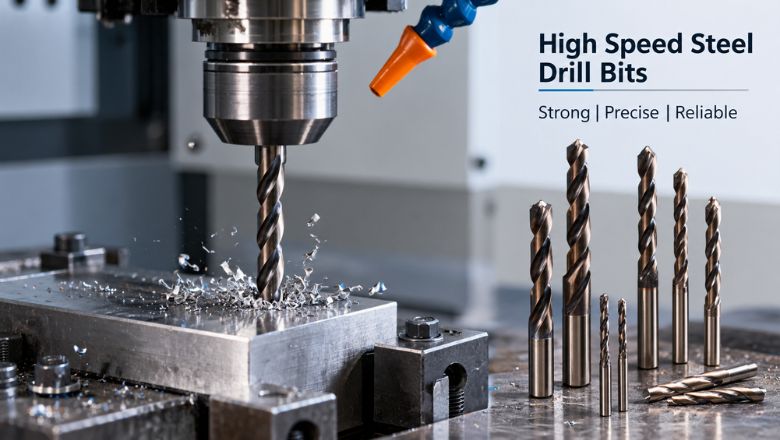
High Speed Steel Drill Bits: Sizes, Grades & Applications for CNC and Industrial Drilling
When a drilling job needs accuracy, repeatability and a clean hole, the drill bit itself becomes an important part of the process. High Speed Steel Drill Bits are widely used across machine shops, fabrication units, engineering workshops and industrial production because they can handle a broad range of drilling requirements without being limited to one particular application.
For operators and purchasing teams, however, choosing an HSS drill bit is not simply about selecting a diameter. The material being drilled, required hole size, machine type, cutting conditions and drill geometry all affect the final result. For buyers looking for application-specific drilling tools, Jay Tech Tools offers a range of High Speed Steel Drill Bits designed for different industrial machining requirements.
What Are High Speed Steel Drill Bits?
High Speed Steel, commonly called HSS, is a tool steel grade developed for cutting applications where the tool needs to maintain hardness under elevated working temperatures. HSS drill bits are manufactured in different grades and geometries to suit different machining conditions.
A standard HSS drill may be suitable for general-purpose drilling in materials such as mild steel, carbon steel, aluminium and certain non-ferrous metals. For more demanding applications, variations such as cobalt-alloyed HSS may be considered when greater heat resistance and cutting performance are required.
This distinction matters. Two drill bits may have the same diameter but behave differently because their material grade, point geometry, flute design and surface treatment are not identical.
HSS Drill Bit Sizes for Industrial Drilling :
Size is one of the first specifications buyers check. HSS drill bits are available in a wide range of diameters, allowing them to be used for everything from small precision holes to larger industrial drilling operations.
Common size ranges include small metric drills such as 1 mm, 2 mm and 3 mm, followed by intermediate sizes and larger diameters used for fabrication and machine-shop work. Inch-size and fractional-size options are also available depending on the tooling requirement.
For production work, the important point is not simply having the correct nominal diameter. Drill runout, machine condition, chuck or tool-holder accuracy and the selected drilling parameters can all influence the actual hole produced.
Choosing the Right HSS Grade :
The term “HSS” covers more than one material specification. Different grades are developed for different machining requirements.
General-purpose HSS is commonly used for routine drilling applications where standard cutting conditions are sufficient. Cobalt HSS drill bits, such as M35 or M42 grades, are used when increased heat resistance and demanding metal-cutting conditions are involved.
For buyers, checking the exact grade rather than purchasing a drill based only on the “HSS” label can prevent an unsuitable tool from being used for a demanding application. For Indian engineering and tooling requirements, buyers can also refer to the Bureau of Indian Standards (BIS) portal to search relevant Indian Standards by product or keyword.
Where Are HSS Drill Bits Used?
High Speed Steel Drill Bits are found in both manual and machine-based drilling operations. When drilling requirements involve more specific cutting conditions, selecting the right tooling is important; related Drilling Inserts can also be considered for suitable machining operations. Typical applications include:
- CNC machining and VMC operations
- General engineering workshops
- Fabrication and structural work
- Automotive component machining
- Maintenance and repair work
- Sheet-metal and metal-component drilling
- Tool rooms and production environments
The same drill geometry should not automatically be used for every material. Aluminium, mild steel, stainless steel and harder alloys respond differently during drilling, so point angle, cutting speed, feed and coolant selection should be considered together.
HSS Drill Bits for CNC and VMC Machines :
In CNC and VMC machining, consistency becomes especially important. A drill must run accurately and maintain predictable cutting performance throughout the operation. Tool-holder condition, spindle runout, workpiece clamping and drilling parameters can therefore be just as important as the drill itself.
For production environments, buyers should verify the drill diameter, overall length, flute length, shank type, point geometry and material grade before placing an order. These details help match the tool with the machine and the actual component being manufactured.
Before selecting a drill for production machining, it is useful to understand the available sizes, materials and specifications covered in our article on HSS Drill Bit: Sizes, Materials, Specifications & Industrial Applications.
What to Check Before Buying HSS Drill Bits :
A practical purchase decision starts with the job rather than the product name. Check the workpiece material, hole diameter, hole depth, machine type and expected production volume. Then consider whether a standard HSS drill or a higher-alloy grade is appropriate.
For bulk requirements, consistency between batches is also important. A reliable supplier should be able to provide clear product specifications and help buyers identify the appropriate drill configuration instead of treating every drilling requirement as the same.
High Speed Steel Drill Bits from Jay Tech Tools :
At Jay Tech Tools, we supply drilling tools for industrial and machining requirements, with a focus on practical tooling needs across Gujarat. Our approach is centered on matching the drill specification with the actual application rather than recommending a one-size-fits-all solution.
If you are looking for High Speed Steel Drill Bits for CNC, VMC, workshop or general industrial drilling, discuss your required diameter, material and application with Jay Tech Tools to identify the appropriate tooling specification for your job.
Get the Right HSS Drill Bits for Your Application :
Need reliable HSS Drill Bits for CNC, VMC or industrial drilling? Jay Tech Tools can help you select the right size and specification for your application.
Contact Jay Tech Tools today for HSS Drill Bit requirements and product details.
FAQs :
What are High Speed Steel Drill Bits used for?
High Speed Steel Drill Bits are used for drilling holes in metals and engineering materials such as mild steel, carbon steel, aluminium and other non-ferrous metals. They are commonly used in CNC, VMC, fabrication, maintenance and general machine-shop applications where accurate and repeatable drilling is required.
Which HSS drill bit should I use for mild steel?
For mild steel, a standard HSS drill bit with an appropriate point geometry is commonly suitable for general drilling work. The final choice should also consider the required hole diameter, material thickness, machine speed, feed rate and whether the operation is manual or CNC-based.
Are HSS drill bits suitable for CNC and VMC machines?
Yes. HSS drill bits can be used in CNC and VMC machines when the drill specification, tool holding and cutting parameters are appropriate for the workpiece. For production applications, factors such as runout, spindle condition, drill geometry and coolant can have a direct effect on hole quality and tool life.
What HSS drill bit sizes are available for industrial applications?
HSS drill bits are available in a wide range of metric, fractional and inch sizes, from small-diameter drills to larger industrial sizes. The required size should be selected according to the finished hole diameter, drilling tolerance and machining operation rather than choosing a drill based only on nominal size.
What is the difference between standard HSS and cobalt HSS drill bits?
The main difference is the alloy composition and resulting heat resistance. Cobalt HSS grades such as M35 and M42 are designed for more demanding cutting conditions and higher heat exposure than many standard HSS grades. The suitable grade depends on the workpiece material, drilling conditions and production requirements.
How do I select the right HSS drill bit for a CNC application?
Start with the workpiece material, hole diameter, hole depth and machine type. Then check the drill’s HSS grade, point angle, flute length, shank configuration and recommended cutting parameters. For production machining, tool-holder accuracy and machine runout should also be verified because the drill alone does not determine the final hole quality.
Why does an HSS drill bit become blunt quickly?
Premature dulling can result from excessive cutting speed, incorrect feed, insufficient cooling, excessive pressure, poor workholding or using an unsuitable drill grade for the material. If the same problem occurs repeatedly, reviewing the complete drilling setup is more useful than simply replacing the drill.
Can High Speed Steel Drill Bits be used for stainless steel?
Yes, but stainless steel requires more controlled drilling conditions because it can generate significant heat and work-harden when machined incorrectly. A suitable HSS or cobalt HSS drill, controlled cutting speed, correct feed and adequate coolant can help achieve better drilling performance.
What should I check before buying High Speed Steel Drill Bits?
Check the diameter, HSS grade, point geometry, flute length, overall length, shank type and intended workpiece material. For industrial or bulk requirements, also confirm dimensional consistency and product specifications with the supplier. These checks help ensure that the selected drill matches the actual machining application.
Where can I buy High Speed Steel Drill Bits in Gujarat?
Jay Tech Tools supplies drilling tools for industrial and machining applications in Gujarat. Buyers can discuss their required drill diameter, workpiece material, machine type and application with the company to identify a suitable HSS drill bit specification.