Threading Taps Supplier for Accurate Internal Threading in CNC and VMC Machining
In precision machining, a threaded hole may look like a small detail, but it can determine whether an entire assembly fits correctly. A thread that is too tight, damaged, or incorrectly sized can slow production, create rejection issues, and increase machining costs. That is why choosing the right Threading Taps Supplier matters for manufacturers working with CNC machines, VMC machines, and conventional machining equipment.
For workshops and industrial units in Gujarat, sourcing threading taps is not simply about finding a tool at the lowest price. Buyers need consistent thread quality, suitable tool specifications, dependable availability, and products that match their machining requirements. Jay Tech Tools serves the industrial tooling market with a focus on helping customers identify suitable cutting tools for practical machining applications.
Why Threading Tap Selection Matters in Production :
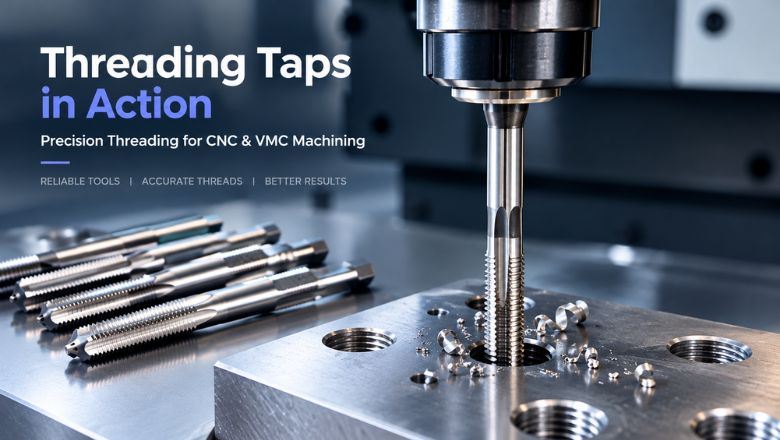
Threading taps are cutting tools used to create internal threads in pre-drilled holes. These threads allow bolts, screws, and other threaded components to fit securely into machined parts. Their performance depends on several factors, including the workpiece material, thread specification, hole preparation, cutting conditions, and tap geometry.
Consider a component manufactured for an automotive assembly. If its threaded holes do not meet the required dimensions, the fastener may not engage properly. The component could require rework or fail inspection. In high-volume production, even a small increase in rejected parts can affect delivery schedules and operating costs.
A suitable threading tap helps maintain the required thread profile when the tool is selected and operated correctly. For manufacturers, this means paying attention to the complete machining requirement rather than selecting a tap based on size alone.
What Should You Check Before Buying Threading Taps?
A reliable purchasing decision begins with the application. Buyers should communicate the following details to their threading taps supplier before placing an order.
Thread size and pitch: The required metric or inch thread specification must match the engineering drawing. For example, an M8 × 1.25 tap is designed for a metric thread with a nominal diameter of 8 mm and a pitch of 1.25 mm. Similar-looking sizes are not necessarily interchangeable.
Workpiece material: Mild steel, stainless steel, aluminium, and cast iron behave differently during cutting. Material hardness, ductility, and chip formation influence the appropriate tap geometry and cutting conditions.
Blind or through holes: Through holes allow chips to exit through the opposite side, while blind holes have a limited depth. Tap design and chip evacuation become particularly important when threading blind holes, where accumulated chips can damage threads or break the tool.
Machine and cutting conditions: CNC and VMC operations may require different tap configurations depending on the machine setup, tool holder, spindle capability, and whether rigid tapping is supported. The selected tool must suit the intended operation.
Accurate hole preparation is an important part of successful threading, so manufacturers should also select suitable HSS drill bits for the required drilling operation and workpiece material. These checks help buyers narrow down suitable products before production begins.
Choosing a Threading Taps Supplier for Industrial Requirements :
Price is an important consideration, especially for manufacturers purchasing cutting tools regularly. However, the purchase price alone does not reveal the actual cost of using a tap.
A tap that wears prematurely or produces inconsistent threads may increase tool changes, machine downtime, inspection requirements, and component rejection. Buyers should therefore compare product specifications, expected application suitability, availability, and supplier support alongside pricing.
When evaluating a Threading Taps Supplier in Gujarat, consider whether the supplier can clarify product specifications, help identify the appropriate tap type, and communicate availability and delivery expectations. Clear technical information is particularly valuable when a workshop handles multiple materials or different thread standards.
For a more detailed look at supplier selection, read our article on How to Choose a Threading Taps Supplier in Gujarat for CNC, VMC & Industrial Applications.
Jay Tech Tools supports industrial tooling requirements with an emphasis on application-based product selection. Manufacturers, machining workshops, and component producers can assess their threading requirements and enquire about suitable tooling options.
Threading Taps for CNC, VMC, and General Machining :
Threading taps are used across a wide range of manufacturing activities. CNC machining centres use them to produce accurately positioned threaded holes in machined components. VMC workshops may use tapping operations for fixtures, industrial equipment parts, and precision-engineered components. General engineering units also rely on threading taps during fabrication and component finishing.
The correct choice depends on the part drawing and production method. A tap intended for one material or hole condition may not deliver the same results in another application.
For repeat production, manufacturers should also establish a consistent process. Verify the drilled-hole diameter, confirm tool alignment, use appropriate lubrication or cutting fluid where required, and follow the tool manufacturer’s recommended cutting parameters. Inspect the finished thread with suitable gauges or inspection methods.
If taps break repeatedly or produce poor threads, investigate the cause instead of immediately replacing the tool with a different model. Incorrect hole size, chip congestion, misalignment, unsuitable cutting conditions, or excessive tool wear may all contribute to the problem.
For reference on Indian standards relevant to engineering products and manufacturing, consult the Bureau of Indian Standards (BIS) and verify the applicable standard for your specific threading requirement.
Why Manufacturers Choose Jay Tech Tools :
Industrial buyers need cutting tools that fit their production requirements, not vague product descriptions. Jay Tech Tools caters to machining and industrial tooling needs, including threading taps and other cutting-tool categories used in manufacturing environments.
Whether a workshop is sourcing taps for regular production or a manufacturer needs tools for a specific component, sharing accurate technical details helps identify the right product more efficiently. Buyers should provide the thread size, pitch, workpiece material, hole type, and machine details wherever possible.
This approach makes supplier discussions more practical and reduces confusion during product selection.
Enquire About Threading Taps at Jay Tech Tools :
Looking for a Threading Taps Supplier for your machining or manufacturing requirements?
Connect with Jay Tech Tools to discuss the thread specifications, materials, and applications involved in your operation.
Visit the Jay Tech Tools to explore the relevant tooling range and submit an enquiry for product availability and specifications. Choosing tools according to the actual machining requirements can help your team maintain thread quality, improve process consistency, and make more informed purchasing decisions.
FAQs :
How do I choose the right threading taps supplier for industrial use?
Choose a threading taps supplier that provides clear product specifications, suitable tap options for your workpiece material, and reliable information about availability. Before purchasing, confirm the thread size, pitch, hole type, and machining application. These details help you identify a tap that matches your production requirements.
Which threading taps are suitable for CNC and VMC machines?
The suitable threading tap depends on the machine setup, workpiece material, thread specification, and hole depth. CNC and VMC operations may use straight-flute, spiral-flute, or spiral-point taps for different applications. Check tool compatibility, chip evacuation requirements, and the manufacturer’s recommended cutting parameters before selecting a tap.
What is the difference between spiral-flute and spiral-point threading taps?
Spiral-flute taps generally help pull chips out of blind holes, making them useful when chip evacuation is a concern. Spiral-point taps typically push chips forward and are commonly used for through-hole threading. The appropriate design depends on the hole configuration, material, and machining conditions.
How do I select the correct threading tap size and pitch?
Start with the engineering drawing and confirm the required thread standard, nominal diameter, and pitch. For example, an M8 × 1.25 tap is designed for a metric thread with an 8 mm nominal diameter and a 1.25 mm pitch. The pre-drilled hole must also match the applicable tapping-drill recommendation to produce the required thread.
Which threading taps are suitable for stainless steel machining?
Stainless steel often requires careful tap selection because some grades can work-harden and generate considerable cutting resistance. The appropriate tap geometry, tool material or coating, lubrication, and cutting parameters depend on the stainless steel grade and operation. Consult the tool manufacturer’s specifications rather than assuming one tap is suitable for every stainless steel application.
Why do threading taps break during machining?
Threading taps may break because of an incorrect pre-drilled hole diameter, chip congestion, tool misalignment, unsuitable cutting conditions, insufficient lubrication where required, or excessive tool wear. For CNC and VMC operations, check tapping synchronization, tool-holder compatibility, hole depth, and chip evacuation before changing the tool.
How can manufacturers reduce thread rejection in production?
Manufacturers can reduce thread rejection by verifying the drilled-hole diameter, using the correct tap specification, maintaining proper alignment, and following recommended cutting conditions. Finished threads should be checked with suitable thread gauges or other approved inspection methods. Consistent tool monitoring also helps identify wear before it affects component quality.
What information should I provide when requesting a threading taps quotation?
Provide the required thread size and pitch, thread standard, workpiece material, blind or through-hole details, and intended machine application. Also mention the required quantity and any specific tool or coating requirements. Complete specifications help a supplier assess the application and confirm suitable product options and availability.
How can I evaluate the cost of threading taps beyond the purchase price?
Compare tool life, thread quality, machining cycle requirements, tool-change frequency, and component rejection alongside the initial price. A lower-priced tap may not be economical if it requires frequent replacement or creates inconsistent threads. Actual performance should be evaluated under comparable machining conditions.
Where can I enquire about threading taps for industrial machining requirements?
Manufacturers and machining workshops can contact Jay Tech Tools to enquire about threading taps and related cutting-tool requirements. Share your thread specifications, workpiece material, hole type, and machine details to help clarify the application. Confirm product availability, specifications, and suitability with the supplier before placing an order.